Sunday, August 9, 2020

Allegations Against Julia Koch and Matchmaker for Her?

Julia Koch & family

Recently it was alleged the 58 year old Julia Koch (widow of David Koch) used nurses to lock her husband David Koch into a room during a dinner party, used code names for real estate property she didn't want her husband to know about, and even had a male companion that she traveled with. 

The allegations were made by Felicia Racine a 29 year old bodyguard and former U.S. Air Force veteran for the Koch family (what is interesting is the security company that protects the Koch family is named Matador Security Company Inc.-which is also the name of the Koch ranch subsidiary/cattle company of Koch Industries). Racine filed an Employment Employment Opportunity Commission (EEOC) after working for the Koch family between January 2018 through April 2020. She was fired in April 2020 an she alleges a discriminatory firing as her husband who was in the Air Force was transferred to California. 

When Racine began employment she alleged that Julia had a 58 year old "boyfriend" Charles Manger (it should be pointed out that Julia Koch is also 58 years old) even though she had been married to David Koch since 1996-which is odd since I can't find any photos of the Julia and Charles together. In fact their alleged relationship was discussed as part of the training for the bodyguards. However, I have seen over the years photos of Julia Koch with real estate agent Bradley Comisar. Manger apparently visited one of many Koch residences (including the South Hampton residence). Racine would have to provide protection for both Charles and Julia as part of her job. In a related news story it looks like a matchmaker may help Julia "find a new husband". Patty Siegal a Hollywood publicist is assigned with the task (she was brought down when the New York Times claimed she helped Jeffrey Epstein rejoin polite society". For the record though a representative for both Julia Koch and Siegal have denied this is true.

Other alleged duties of her job entailed Racine included getting David Koch Jr. a fake identification and making the bed for daughter Mary Koch (I would think with their kind of wealth they would have maids doing this) and preventing Mary from hopping on private planes for short trips to visit friends. 

Another claim was that Julia would refer to homes as code names so David Koch was not aware of these purchases. In October 2018 the Koch's purchased a $40 million Manhattan townhouse which was well publicized. In 2016 the Koch family suffered a small fire at their 740 Park Avenue home. Julia Koch had been renovating the home for a number of years and David Koch made the comment "I told Julia there was no budget, and she still managed to go over the budget". In addition to keeping real estate Julia also wanted to keep family trips secret as well. A so called Project X trip to South Africa where Julia would bring her siblings, nieces, and nephews was to be kept from David Koch. 

Also there is the allegation that back in 2019 during a dinner party David Koch was leaving his bedroom and attempted to put his arm around his wife and said he loved her only to have Julia asked another staffer and some nurses to take David back to his room and "lock the door, so he doesn't interrupt the dinner party again" according to the allegation. Given that Koch Industries never released what illness David was battling it is unknown whether his cognitive abilities were affected. 

A spokesperson for Koch Industries has called these allegations "baseless". Although, I have been following the Koch family for almost a decade (my first on Koch can be found here-back in 2011) I have never heard Julia Koch talk (despite spending hundreds of hours finding obscure documents/videos/and other interesting findings). The question will be will Julia Koch issue a press release regarding these comments including an interview or will the family settle the lawsuit out of court to keep things hush hush. 

It should be important to note that David Koch had declining health for many years before he passed. Charles Koch noted that back in October 2016 that his brother's health was going downhill. Also if you look at Getty Images the past few years photos of David Koch show him having lost weightnot looking well, and towards the end mostly Julia Koch in photos and his absence. Speaking of images if you look at photos of David Koch from the 1980's (here and here and even in the mid 1990's here it appears his teeth are discolored, however then by the early 2000's you can see his teeth are very white and straight (maybe Julia talked to him about this). 

Also I have reported before that David Koch in the mid 1990's attended some events with attractive women (one before he married Julia and one after he married Julia). I am guessing that David was friendly with these women but I would be curious to know how Julia felt about this. With these recent allegations the Koch camp claims they are baseless (if they are really baseless then Koch should counter sue for defamation).

It is hard to know how much (if any of the allegations are true). My hunch is that some parts may be true but until there is more data it is hard to speculate. Ms. Raccine may just want her 15 minutes of fame and move on. The thing that is surprising is I would have thought that Koch would have contracts that employees would be required to sign (especially ones working directly for the family) to avoid issues like this and to keep things confidential. The other question is if other former employees will start speaking out as well. Of course time will tell. 

Saturday, August 8, 2020

David Koch Sells Aspen Homes (Available for Rent) and His Impact on Aspen Community


Recently, David Koch sold both of his Aspen homes. It was reported by the Aspen Times who reported it as the largest property transaction for the week. I blogged about the home in previous post regarding the lifestyle of David Koch here. Koch actually purchased two homes.

The first home was purchased by David Koch back in January 1989 for $1.9 million. This main Aspen home was 8,100 square feet, 5 bedrooms, and a sit on just over 1 acre of land. The home was remodeled in 2013. The home would be part of a Vanity Fair photo shoot in March 2003 (the photo shoot was just after Christmas in 2002). The 865 Roaring Fork Road home is available for rent for $175,000 per month. As you can see from the listing the home as a very extensive wine cellar. The home was sold in June 2020 to the Lauder family for $23 million (this would say that the annual compounded growth rate of the home was almost 9%/year-however this doesn't take into account money put into the home to update and upgrade).

Under a 2003 Trust (David H Koch 2003 Trust-the trust was created in January 2003) the home was purchased (David Koch himself was the original purchaser of the home. The problem is if you pass and you own a home in a state (which is not your residence) then the home is subject to the probate process. If the home is placed inside a trust it avoids having to go through the probate process (if something goes through the probate process it is open for the public to view it). The home was famous when David was a bachelor in the early 1990's and would have 800 guests for the annual New Year's Eve party and was ranked as one of the best parties by Newsweek to crash. On Christmas Eve 1993 Charles Koch gave a moving toast to his brother David Koch and after Charles was done with his speech David asked "Does this mean you will let your daughter Liz go to my New Year's Eve party" and Charles responded "Hell, no". Charles obviously knew what went on at those parties and knew his brother.

The second Aspen home David purchased was actually on the same street and had three bedrooms, 3.5 baths, 2,675 square feet (more like a guest home) and last year valued at $7.9 million. It should be pointed out that brother Charles Koch owns a property on the same road as his former brother David did.  David Koch purchased the home in December 1991 for only $1.75 million. The home in June 2020 was sold for $12 million (~6.8% appreciation per year). This home is actually available for rent as I write this for $50,000 per month.

David Koch had an impact on the Aspen community. Back in the 1990's Koch was a significant investor into the Isis Theater (the theater is temporarily closed due to COVID). The main attraction to him was the potential investment in the theater. In 1992 he tried to donate an Olympic size rink to the city of Aspen (Koch himself was willing to spend $3 million (he actually spent $50,000 on the planning and designing of the rink) however the rink was rejected by by the city council (it failed by 1 vote). The issue was during the summer the rink would having to be moved and transforming the area for other purposes was going to be too disruptive. David Koch during his life was also a board of trustees for the Aspen Institute. During the 1990's Koch gave over $1 million to the institute who was known for as a non partisan think tank that is committed to ideas in the area of business, energy, education, and other topics. It was actually at a July 2015 Aspen Institute event that David Koch ran into climate change activist supporter Tom Steyer were they chatted for a few minutes, posed for pictures (even shaking hands-I wonder how the woke folks would feel about this), and then after the event privately had coffee.

My guess is that the Koch estate is looking for liquidity. With $23 million on one home sell and $12 million would be roughly about $35 million of liquidity. Remember these monies were placed into trust as well so they will stay in trust unless distributed. Although, I don't know how the estate plan for David Koch works but there is no doubt it will provide estate liquidity.

Saturday, March 21, 2020

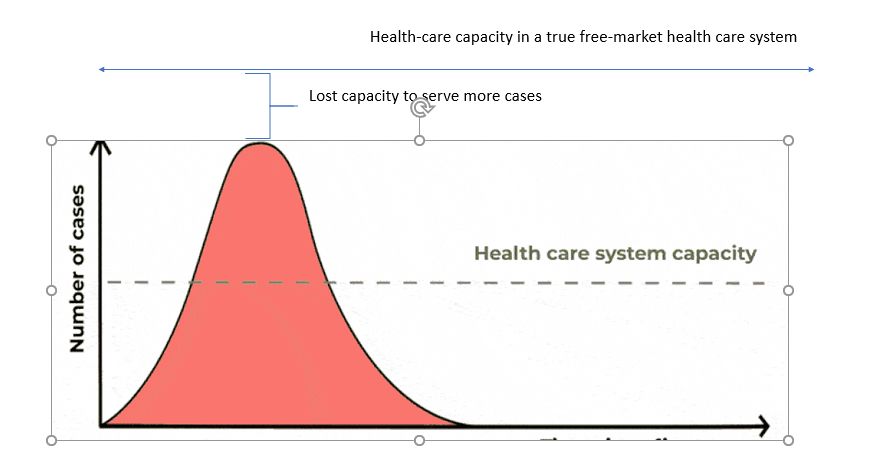
Instead of Flattening the Curve Expand the Curve.


With the coronavirus we have heard time and time again of the flattening of the curve. The basic premise is that we have to stretch out the number of cases of coronavirus due to the restraints within the healthcare system. There is some truth to this given any system can only absorb so much demand  in a finite period of time (there aren't endless resources after all). However, what gets missed in this view is the opportunity of the unseen as so many regulations and red tape prevents the expansion of the capacity for healthcare services.

The first thing to understand is how the government (mainly the CDC/FDA) totally mismanaged the testing for coronavirus. As I detail in my last post detailing how the CDC created it's own faulty test and then the FDA required the CDC to retest every positive coronavirus test for accuracy. If you remember in the early days of coronavirus anyone who tested positive for coronavirus "had" to have their sample sent to the CDC center in Atlanta. Even scientists in Seattle who tried to run their own testing were shut down by the CDC and FDA (their lab wasn't up to Medicare standards). In my last post I detailed the massive amount of regulation regarding lab testing (The Clinical Improvement Act of 1967 plays a large role in this). Also the FDA was asking this Seattle lab to require any of their samples to be run 5 times for accuracy (also this is utterly impractical given at the time there were few cases of coronavirus). Now you sit back and say to yourself how many people have gone un-diagnosed/passed away because of the mismanagement from the FDA and CDC? The FDA/CDC should have immediately let private companies and organizations testing organizations come on the scene to rapidly implement the tests they already have. If this had happened you would have seen tests been quickly deployed and individuals learning whether or not they had the virus so they could have determined whether or not to isolate themselves. Fortunately the FDA has backed down on the regulation front and currently 80 different companies are trying to apply to develop testing. You have companies that are innovating at home tests, blood tests that take 8-10 minutes, and developing processes for testing that the CDC/FDA would never dream of.

There have been talks the United States will run out of hospital beds to care for coronavirus patients. Looking at the data the United States is a little over 6,100 hospitals in the United States (this includes profit and not for profit hospitals). This translates into roughly 924,000 beds that can be used at any given time. However, at any given time roughly 66% of hospital beds are full. Running the quick math this would say that there are roughly a little over 300,000 hospital beds available. If you look back to 1975 there were actually more hospital beds then there are today (back then close to 1.5 million beds and there were also only 216 million people in the country at that time vs. 330 million people today. To translate this number this would say in 1975 we had a hospital bed for .69% of the US population vs. 28% today. Now it should be pointed out that there have been advancements made in medicine that has reduced the need for people to not require hospitalization. Another way to look at the number of hospital beds is per 1,000. The United States has 2.8 beds/1,000 people. Actually this is similar to Italy (3.2 bed/1000 people) and greatly lagging behind South Korea with 12 beds/1,000 people. Moving towards a country with more hospital beds would be a wise decision. However, the regulatory burden to open a hospital doesn't allow just anyone to open a hospital.

I haven't seen anyone study the regulation of hospitals but I did some research regarding what would it take to open up a hospital (this blog gets into the details). Well first you have to get a license from the state (I found the one for Texas which is 14 pages here). Also you shouldn't forget your fire safety report too. Also before you even get state the occupancy of your hospital you have to get approval by the Architectural Review Group of Health and Human Services. The Architectural Review Group has to approve an application before any construction begins (this is about 9 different steps by itself). It is also recommended for the applicant of the hospital to attend a feasibility conference before they get approval. Once all that is approved you will have to pay a license fee of  $39/bed (which is not refundable). Then if you want to get certified by the Joint Commission that will run you about $46,000 per year. If you plan to get any type of funding from Medicare you will have to at least abide by these rules.  Clearly, opening a hospital is time and capital intensive and has large barriers to entry. I haven't even gotten into the certificate of need (CON) laws that allow existing hospitals/medical facilities to block the opening of hospitals that are considering opening which reduces the number of potential hospital beds by tens of thousands.

On the other hand you have innovators like Dr. Devi Shetty who is able to open up hospitals all around the world and a hospital was built at a cost of $700,000 per bed (a 65% discount) to the $2 million per bed it would cost in the United States. These hospitals also negotiate prices with their suppliers. For example when the hospital was looking at disposable gowns one company offered to make the gowns for $75 and the hospital found a factory that could make the gowns for $37. If hospitals in the United States operated liked this not only would the cost of healthcare drop but the quality would increase as well as there would be more competition.

For years I have been saying for roughly the past decade that the FDA has over regulated and has left individuals with fewer options (to treat their own life). If the FDA simply had a longer Phase I trial to just simply test the safety of a drug and report the results and allow patients and healthcare professionals to determine what is best for them (also it is important to note the prices of drugs would decrease as there would be more competition). What people seem to forget is it takes a drug company roughly $2.5 billion of capital and 12 years to bring a drug to market to patients. If you just say the average life expectancy of the America is 78 years you have to wait 13% of your lifetime to watch one new drug get approved. The chances of getting a drug from the molecule level to market is 1 in 5,000. Now the important question to ask is how many drugs that were submitted to the FDA were safe however not approved for whatever reason (the FDA seems to believe we all comprise of the same biology-even though this is utterly insane). On the one plus side Mr. Kevan Shokat (chemist at UCSF is sifting through 20,000 drugs approved by the FDA to see if there are possible drug candidates for coronavirus. Now if the FDA just stuck to approving drugs that were safe that database could be have a multiple of the number of drugs approved today and possibly alleviate some of the symptoms from the coronavirus. Also it is important to consider once a drug is approved it is only approved for one use (cancer, heart issue, etc.). However, the reality is some drugs are used to treat multiple things (example Propecia was used originally used to treat men who had an enlarged prostate but then was found to help men regrow their hair). However, the FDA will not allow companies to tout additional benefits other than what the drug was originally approved for. Once a drug is approved however the FDA can't limit or control how drugs are prescribed. Doctors and patients should be allowed (once a drug is approved) to use that drug in anyway they see fit. Often times the doctor is knowledgeable about the patient's medical history/previous experience with drugs taken/aware of the benefits and side effects of the drug. Also let's not forget patients these days are armed with information too and often times are just as up to speed as doctors for treatments (especially if they have a chronic illness). It is worth noting too that there are specific databases for off-label use were medical providers compare notes on the drugs used, how effective they are, case studies, dosing issues, and the risk/benefit considerations when factoring in whether or not to prescribe certain drugs. The Wolters Kluwer database has over 2400 off-label uses. Allowing researchers/doctors to try different drugs for off-label use may potentially find a treatment to alleviate some of the symptoms of coronavirus.

While we are on the topic of drugs it is important to point out the number of drug shortages. The University of Utah actually keeps track of the drugs that currently have a shortage. As I write this roughly 207 drugs are on the list. Roughly close to 50 drugs have been added to the list within the last week. Again the reason for the drug shortages has to do with the over-burdensome regulation of the FDA. If you have half a day to kill you can read through some of the regulations here. The regulations focus on things like the type of equipment used, the water quality used to make the drugs, how often your facility has been inspected, the records kept by the lab, packaging and labeling, along with personnel requirements. The FDA in recent years has increased their regulation of manufacturers and have adopted a "zero tolerance policy". Drug manufacturers must ask the FDA for approval to make the drug, then get approval on how much of the drug it plans to make, and agree on the time frame. Also if a one drug manufacturer shuts down another drug manufacturer can't increase it's production without FDA approval. Also a program as the 340B drug rebate program allows hospitals and clinics to get discounts (between 13-23%) on drugs in order to provide these drugs to provide to patients on Medicaid (low-income) which then allows these medical institutions that participate in the program to stockpile drugs at a reduced cost. Drug shortages will continue to grow in this time of crisis and not allow patients to truly receive the treatments they need unless the FDA reverses course lightening the regulation and become more flexible in allowing companies to produce the drugs that some people are in desperate need of.

Also some other low hanging fruit is to reduce the regulatory burden on physician assistants/nurse practitioners. Currently 29 states require some level of supervision for nurse practitioners and 20 states require a percentage of physician assistant charts to be co-signed by the physician. There are more than 290,000 nurse practitioners and 118,000 physician assistants. If regulations in these professions were relaxed doctors, physicians assistants, and regular physicians would save tens of thousands of hours that could be used to treat patients who are suffering from coronavirus.

In this time of crisis however there are some creative solutions. For instance empty hotel rooms are being turned into hospitals and even using cruise ships for additional hotel rooms.  Speaking of other sensible regulations that allow individuals who may have an out of state medical license to practice in different states.  Even Medicare has expanded to include telemedicine (it is important to note that private companies have been using medicine for years.

Instead of flattening the curve the focus should be expanding the curve by reducing regulation to allow more drugs, procedures, medical professional and resources to work on the problem. If the FDA and CDC had allowed more testing companies to get their product out to the market more people would have known whether or not they had the coronavirus and then the public would have better information has to who should stay home or who is okay to go out (instead many states have shut down for business). The lack of the number of hospital beds could be greatly helped by reducing the barriers to entry. We need more innovation in terms of letting more companies and individuals open more hospitals that could be housing coronavirus patients. Letting the FDA relax their rules regarding off-label use would work wonders to allow researchers to experiment with any drug that is approved by the FDA may help find some accidental wonder drug that could help. While we are on the topic of the FDA having them back down on the "zero tolerance" for drug manufacturers would reduce the number of drug shortages which is critical in times like this were patients need these drugs the most. Lastly, allowing states to not require nurse practitioners to be supervised or require physician assistants to have their charts co signed by doctors would free up the much needed time of medical professionals to attend to sickly patients who are in need of treatment (and also reduce the work load on these medical professionals who are already burning out). Attacking all of these issues would help not only expand the curve of possibilities but end of saving more lives, improve the quality of living, and reduce the red tape for researchers, doctors, and medical practitioners and result in a win-win for everyone.
Saturday, March 14, 2020

Why the Private Individuals and Organization Are Ahead of the Government in Responding to Coronavirus

Image result for coronavirus

For the past couple of weeks coronavirus has been in the news. Back in Dec 2019 China had a number of cases of pneumonia and then within the first week of December 2019 the Chinese government confirmed that these individuals actually had confirmed this was coronavirus. Since then there has been fear, angst, and anxiety around the world regarding how quickly the coronavirus has spread (as a result people are hoarding toilet paper, antibacterial soap, and bottled water acting as if the world will end). While I feel the spread of the coronavirus is awful I believe the federal government has only made the problem worse with excessive regulation and now allowing the decentralization of decisions from private companies, individuals, and organizations to override government power. Some companies have voluntarily told employees to work from home to avoid the spread of the virus while others have even created their own coronavirus schedule. Luckily there are some individuals and private organizations that are helping out.

The first major issue has been the ability to test individuals who have the coronavirus. During the months of January and February 2020 the number of coronavirus cases in China was rapidly increasing however The Centers for Disease Control (CDC) decided to create it's own test rather than use the World Health Organization (WHO). The CDC has issues in terms of having people testing positive (who actually didn't have the disease).  What is insane is the FDA requires the CDC to retest every positive corona virus test run by a public health lab for accuracy (the CDC is also the same organization that predicts 1.7 million in the U.S. will die from coronavirus).  I remember hearing on the news that samples for the coronavirus "had" to be sent to Atlanta first and having the thought "why?-surely there are thousands of other labs in the country that could test for coronavirus". 

Now take the case of a German scientist named Olfert Landt within 10 days after the New Year created a viable test kit for coronavirus. Landt and his team worked 12-14 hours per day (his son works a "part-time 60 hours a week" job) and within the past 2 months the company has created 40,000 test kits. The test kits run about $180 each and he has received orders from all around the world. The company has produced enough test kits to have 4 million individual tests. What is interesting is the test is just a throat/nasal swab and the results can be found within a few hours. The WHO began shipping these tests out February 1, 2020. The CDC created a test was then approved by the FDA on February 4, 2020. However the results of the CDC test were flawed as an ingredient in the CDC test created false results. It wasn't until February 29, 2020 that the FDA allowed hospitals to use their own tests for coronavirus. 

There are even situations were individuals take testing matters into their own hands and the government shuts it down. Dr. Helen Y Chu (she went to Duke for medical school and taught at Harvard Medical School) in Seattle who is both board certified in infectious diseases and internal medicine. The Seattle Flu Study (funding came from the family office of Bill Gates) studied individuals who were both health and sick individuals to try to help the city of Seattle detect the flu earlier, develop new ways to treat, and help the city prevent outbreak. The Seattle Flu Study is constantly taking nasal swabs from residents in the area so had good data on what the general flu looked like. On February 25, 2020 Dr. Chu and her team couldn't wait any longer and decided to take matters into their own hands and began performing their own coronavirus tests. The government from both federal and state levels had told Dr. Chu and her colleagues that no they could not create their own tests for multiple reasons. The first is patients never gave their explicit permission, and the labs were not certified by the FDA because the lab would have to meet Medicare standards-this could take many months before approval. The FDA for example would require the test to be run 5 times on the sample sample to validate it (which is insane since the number of positive cases for coronavirus is so few given the lack of testing due to government mismanagement). The CDC promised kits would be distributed within days (days would turn into weeks). It wasn't like you had Elizabeth Holmes running these tests. The CDC told the Seattle Flu Group creating their own test would not be possible. The CDC and FDA told Dr. Chu to stop testing thousands of samples they had already collected from individuals. During this time 22 people were dying from coronavirus. 

So not just anyone can start a lab (this isn't Breaking Bad). In order to be certified by you first have to comply with The Clinical Laboratory Improvement Act of 1967. Let's not forget the Clinical Laboratory Improvement Amendments of 1988.  The 1988 was passed in response to false negative Pap smear tests. Also let's not forget each state may have their own regulations which may be even more stringent than the federal laws. Under this act any facility that performs testing under the law is considered a lab-even if only a few basic tests are performed and the lab isn't charging. If you want to start a clinical laboratory. Here is the 10 page application you have to fill out to get certificate from Medicare. The certificate is only valid for a 2 year period. Oh and before signing the application you must make sure you comply with Section 353 of the Public Health Service Act you could possibly be imprisoned for up to one year. Let's also remember if someone violates the regulations they could face possibly: criminal penalties, up to a year in prison, a fine of $10,000 per day, and possibly not able to participate in other federal programs. In 1995, inspections showed that 80% of labs had compliance issues. Thankfully Medicare publishes the top 10 deficiencies of labs. Regulations also specify who can work in the lab. For example an individual that performs "high complexity testing" must either be a doctor or have at least a science undergraduate/associates degree with 60 semester hours of sciences (chemistry/biology/etc), complete a training course, have at least 3 months of laboratory training in each specialty in which the individual performs high complexity testing. So if you were a philosophy major don't bother getting near a laboratory. It should be pointed out that the smaller to medium size laboratories are not getting rich either. About 50% of laboratories have a profit margin at 3% or less (meanwhile companies like LabCorp/Quest Diagnostics and other labs are able to generate much higher profit margins because of their scale and size). Medicare recently also increased the fees on these labs by 20%. Now depending on the type of lab (determined by how many tests are performed each lab could be paying up to tends of thousands of dollars for each certificate.  

As I write this 9 different companies are working on a vaccine for the coronavirus. It looks like Gilead Sciences is the furthest along with an IV treatment (remdesivir) currently in a Phase 3 trial (the treatment has already been used on a woman in California who was on the verge of death who improved after taking the drug (it should be pointed out it took the CDC 4 days to just to agree to evaluate the samples (it didn't meet their strict criteria) and then another 3 days for the results to come back. As her health declined her doctors at UC Davis applied for compassionate use (the drug manufacturer has allowed hundreds of patients to try remdesivir) from the FDA which would allow patients that are not part of a clinical trial to test a drug. Also it is believed that the earlier the drug is administered the higher probability there is to help the patient. The government wasting time telling a patient they are too sick to get treatment most likely made the woman worse off than she would have otherwise have been. Also if someone is dying don't they have a right to their own life and what treatments they receive? As I write this a Canadian company has said it has a "vaccine candidate" just 20 days after obtaining the gene of the virus and once they get the green light could produce 2 million doses/month. My question is why can't patients work privately to determine what drugs are best for them? Most likely by the end of the year with all these companies working on vaccines and probably even more will try to enter to create a vaccine (remember it usually takes 10-15 years to create a vaccine). 

Speaking of testing just yesterday the FDA approved a test (as I write this the first approval from the FDA from a private company-the only other approved tests are from the New York Department of Health and the CDC). According to Roche the company can provide millions of tests every month and can test patients 10 times faster than their old system. Speaking of testing as I write this there is a testing capacity of ~27,000 patients per day. It is important there are over 260,000 clinical laboratories in the country. Although hospital labs are only roughly 5% of the labs they perform 55% of all the lab testing. Innovators and entrepreneurs have came into the market and are offering different ways to diagnose coronavirus. One small biotech company called Aytu Bioscience in Denver will be able to test for the virus with just a small drop of blood within 10 minutes! This blood test has already been used in China for the past 6 weeks (however the company needs to get emergency approval from the FDA). There has even been some innovation with setting up drive through coronavirus testing. Speaking of Colorado another company has devised a UV light that kills 99.9% of bacteria and viruses (however it is not known if it can kill the coronavirus but the companies believes it can). Entrepreneurs, companies, and organizations are much better at quickly adapting to solve problems (even in national pandemics) then government entities given the incentives at stake. The market would develop a coronavirus test that could be ordered off Amazon Prime or have someone pick up at Wal-Mart/Target/CVS. 

Many people have talked about how the hospitals will be overburdened with the coronavirus as a result of many people possibly needing to be hospitalized. One big issue is that certain states have are certificate of need (CON) laws that prevent just anyone from opening a hospital or medical facility without first getting approval from the state. There are currently 36 states that have CON laws. A study showed that having these laws actually reduces the number of hospital beds to patients (beds that could be taking care of patients with coronavirus). In some states this can add up to 10,000-20,000 hospital beds for some states. Now when you aggregate all the states that have these laws you are looking at many thousands of people who wouldn't be able to access healthcare because of regulation.

It is important to note much of the advancement in fighting the coronvirus has come from private individuals and organizations. Scientists from around the world were the first to sequence the genome of the coronavirus and put it online for others to study. A German company created a testing kit that is now being used around the world (while the CDC couldn't even get an accurate test out and could only produce it in limited quantities. Compare this to the power of Roche, LabCorp, Quest Diagnostics who were ready to step in with their tests (these companies can run substantially higher number of tests and more accurate than the CDC testing), however were blocked by the FDA and the CDC. The many weeks of delay from the FDA and CDC could have allowed individuals to get tested for the virus and given them the knowledge to know whether or not they poses a risk to others. The U.S. government knew for many months of the coronavirus and it looks like finally this coming week will have enough tests for people. Also you may have many people worrying if they have the disease which may cause them anxiety and panic for the fear of not knowing. I have no doubt that a private company or organization will find a vaccine for this virus. The real heroes are those individuals who are working day and night trying to advance the understanding, treatment, and hopefully cure for the coronavirus. The coronavirus like many other things has taught us that viruses move much faster than government bureaucracy and red tape. The collective efforts of Gilead, Roche, Olfert Landt, Dr. Helen Chu and Aytu Bioscience have done more to help individuals around than the FDA or CDC could ever dream of. 

Saturday, February 29, 2020

Free Market Solution for Medicaid: Turn It Into An Health Savings Account

Image result for medicaid

After my post on how to transform Medicare into more of a free market system I thought about what if the same idea was applied to Medicaid. Medicaid currently provides benefits to 74 million low income and disabled people. Medicaid in 2017 spent $582 billion. This would mean on average Medicaid spent $7,800 per Medicaid beneficiary. Each state administers Medicaid but the actual funding comes from the federal government (i.e. taxpayers). Medicaid spending is used for hospital care, physician services, prescription drugs, and nursing homes. In a previous post years ago I pointed out how to the government makes it extremely difficult and expensive to open a nursing home (there were more nursing homes in 2010 than 1995 despite a dramatic increase in the number of people requiring these services). One major issue with Medicaid is the improper payments for turn out to be about 12% of it's budget or $139 billion (even Wells Fargo with all it's issues doesn't have a improper payment rate close to this). What if individuals were allowed the freedom to spend Medicaid dollars as they see fit?

A solution that would offer Medicaid beneficiaries a health savings account (HSA) that would allow individuals  more options, better quality care, and reduce the burden on taxpayers and greatly improve efficiency. The basic idea of an HSA account is that money is contributed and the growth is tax free and if distributions are taken to cover medical expenses the growth in the account is not taxed. These accounts over a variety of investment options that allow individuals to invest the monies as they see fit. The idea is allow contributions to grow over time and then to use the monies inside of the HSA for medical expenses as they come up. It is important to know that each states have their own rules regarding Medicaid (so not only would the states have to approve this plan but the federal government would have to approve it as well).

Current legislation only allows individuals with high deductible insurance plans to have HSA plans. This current legislation would have to be repealed to allow anyone to have a health savings plan (which wouldn't be a bad thing). The state government every year would deposit monies spent on Medicaid into the HSA plan for Medicaid beneficiaries and allow Medicaid beneficiaries to use the funds for health insurance or health expenses (I prefer the money being deposited into the account over vouchers so Medicaid beneficiaries don't have to go through a middle person or agency). If money is taken out from an HSA for non-medical expenses the penalty is to pay both the income tax and a 20% penalty (for Medicaid beneficiaries I would be okay increasing this penalty to 50%-75% ) as an incentive not to withdraw monies. Any penalties would be just be additional government revenue.

As Medicaid is run by each state there are financial requirements in terms of how an individual can qualify. However, if an individual Medicaid beneficiary was able to use $7,800 of benefits every year that would allow them to have power in the market place and make choices in terms of what health care they wanted and allow them choices in deciding what doctors to use, what prescriptions to purchase, and what treatments they would like. Also with 50 different states there could be experimentation which plans and see which plans worked and which ones didn't. The $7,800 could be the maximum amount of benefits allowed with it being phased out based off income. For example someone without any income would get all the benefits however someone that earns $15,000 would get a reduced amount of the $7,800 (this would help in rein in the cost of Medicaid). Now when you run the math if there was a family of 3 is on Medicaid this would be over $23,000 of health benefits annually that could be used (I am not opposed to a family maximum limit either). Not only could the health benefits be used for the current year but could be saved and invested for future years if Medicaid established HSA for beneficiaries. Allowing individuals to invest the monies in their HSA accounts would over time allow the account to grow in value which would allow individuals to save for their future medical costs (and have individuals learn about deferred gratification). In addition to this, if the monies were invested in either the stock market/bond market it would provide a boost in giving corporations capital (possibly hundreds of billions of dollars) which would give the economy a major boost.

In addition to this, if Medicaid beneficiaries could use the funds in the Medicaid HSA account to bid on medical services it would create even more competition. Medibid is an online platform that allows individuals seeking medical services to bid on medical procedures and services online. Recently the platform had over 265,000 paid subscribers (83 employer groups are included in this number too). The online provider features "all in prices" for medical services and you don't have to worry about separate bills from different providers. Patients are able to see the ratings a particular doctor has and the number of those procedures the doctor has performed (Medicaid doesn't even have this type of information). As a result patients are provided transparency in terms of quality and price. Medibid users are saving 70% on MRI scans, 63% on CT scans, 53% on colonoscopies, and 35% on ultrasounds. Now if Medicaid patients were able to use Medibid they would be able to shop around and Medicaid would actually be savings tens of billions of dollars a year. An interesting point is if you the 74 million people on Medicaid shopping online for medical procedures there is no doubt the price would decrease even further and induce more doctors to want to offer their services.

Medicaid doesn't even provide quality care to its beneficiaries. What is fascinating is that patients on Medicaid are 13% more likely to die than patients who didn't even have insurance and 93% more likely to die than patients with private insurance. Shouldn't we allow low income individuals the freedom to make choices so they don't die? The funds in the health savings account could be used by Medicaid patients to enroll a direct primary care program. Direct primary care is not health insurance however allows patients to pay to directly contact their doctor 24/7 if that have any issues. The fee covers clinical and lab services and sometimes doctors can get prescription drugs at a cheaper price. The cost of direct primary care can range start at $50/month. If a Medicaid beneficiary thought $600 was worth it they could use their HSA to purchase direct primary care services.

Medicaid has a low reimbursement rate. It should be noted that Medicaid pays about 61% of what Medicare pays. Of course doctors would be weary to accept Medicaid patients. In addition to getting paid less doctors have to worry about filling out more complicated forms.  Not only do doctors receive less for their work but in addition have to fill out more complicated paperwork. Doctors would receive payments direct from these Medicaid HSA accounts and not have to worry about billing or reimbursements from the government. Given that reimbursements from Medicaid can take doctors up to 2 months to get paid doctors wouldn't have to worry about the timing of payment.

The cost of health insurance premiums has exponentially increased. In 2008, the average monthly premium for an individual cost is $159/month and then by 2017 the premium would be $393/month which is a 147% increase. As of 2018 the monthly cost for a family health plan cost was $1,168. Obviously the large increase was due to the passage of Obamacare which mandated coverage and required insurance policies to cover "essential benefits". In in this post  I explored 10 ways in which the cost for healthcare costs could dramatically be decreased. If Obamacare was repealed and these reforms were in place health insurance could be a fraction of the cost (and more like the rates from 2008) and allow many more individuals (including those on Medicaid) to afford a decent health insurance policy and allow them to get more bang for their buck out of the $7,800 provided by Medicaid. If there was massive insurance deregulation and the premium per individual was only $159/month (2008 figure however with massive deregulation it be even less) it would say over 1 year an individual would pay close to $2,000 a year in premiums.

The $7,800 amount per person is already being spent by taxpayers on Medicaid beneficiaries. Why not allow Medicaid recipients and families decide how they will spend their healthcare money to allow for greater efficiency, more access, and allow individuals to take control of their health/financial futures.

One state that has attempted to try a Medicaid HSA program is Indiana. In Indiana Medicaid members "HIP POWER account holders" get a $2,500 deductible health plan. The state contributes $1,100 per adult per year to pay medical costs. Participants pay up to 5% of the family gross income (this can be between $0 to $105/month (depending on the family size). Also it is important to note that roughly 1/3 of beneficiaries pay nothing). Employees were less likely to use high-cost emergency rooms and most likely to use generic brand name generics. This resulted 35% lower health-spending and individuals were going in for mammograms, check ups, and other preventive care at the same rate as traditional insurance plans. Members contribute 2% of their income (members own their contributions and if they leave the program are refunded the pro-rata share). What is interesting is that 70% of members make contributions (only 5% of the members left the program due to affordability). The interesting thing is about 80% of members are satisfied.

The example of a Medicaid like plan rolled out nation wide would do wonders to help Medicaid beneficiaries. If roughly $7,800 is spent on each Medicaid beneficiary and you had individuals pay a small portion of their income to get access to Medicaid HSA plan (with a deductible of a few thousand dollars) this would save the government lots of money, allow patients greater access to their healthcare decisions, would allow doctors to get paid quicker and more efficiently and if patients had health savings accounts it would dramatically reduce the current Medicaid fraud (save over $100 billion on this alone). Adding Medibid to Medicaid in the base case would save Medicaid billions of dollars a year. Most importantly Medicaid beneficiaries would have the same power that all other individuals have in the market place to decide who provides them medical care. Often times patients can't go to a doctor because they don't accept Medicaid. Of course too I wouldn't have state/local governments administering the HSA accounts either (you could have companies like ADP, Fidelity, Paychex bid on these projects-which would add additional revenue for the states)

A change like this to Medicaid would be a much needed improvement over the current system and be beneficial to Medicaid beneficiaries, doctors, and taxpayers. Of course politically this would be hard to pass given that politicians like to run other peoples lives.

Friday, December 20, 2019

Kochland: My Lengthy Review and Other Comments

Image result for kochland

Christopher Leonard back in August 2019 published Kochland after many years of research. The story starts out with Charles Koch in the early 1980's meeting with Morgan Stanley investment bankers to try to talk Koch Industries into going public (and Charles Koch would personally earn $20 million). Of course Charles would understand that if he reinvested the profits back into the company he could grow the company to a point beyond on his wildest dreams (as I write this Charles Koch has a net worth over $42 billion) so it looks like he was wise to pass on that deal from Morgan Stanley.

What is clear is that Mr. Leonard spent a considerable amount of time researching this book and doing honest to goodness journalistic reporting for this book by interviewing many individuals. Even though I have read many books it bothers me when people don't actually do the research and it feels like someone just slabbed something together in a few months. In fact it took 8 years to write Kochland and the author interviewed people for hundreds of hours to get a complete view of Koch Industries. Also I like how the author does each chapter chronically (although at certain points of the book I wished he would pin down the time line of specific events). The book goes back and forth between the political commentary and telling the business story of Koch Industries. Actually, there could be two separate books (one for the political side and one for the business side).

Overall, he gives of Koch Industries a fair assessment of both the positive and negative things the company has done throughout their long tenure. Chris does an extremely great job of taking very complicated subjects and boiling them down to their essence (especially when talking about energy trading and oil markets in general). You can see in his writing that although Chris doesn't agree with what Koch Industries stands for politically however he does admire the company for how they operate their business (focusing on the long term, very analytical, and continuing trying to drive improvement). He gives more meat to the Koch business side instead of just covering the political side. The one thing I don't fault the author for for is Koch Industries not giving more access to Charles Koch. Koch Industries also was aware of the type of reporting from Mr. Leonard as he wrote a piece about Koch for Fortune many years ago. Much of the story around Charles Koch had to be told through secondary sources.

The book tells the story of many interesting characters that worked at Koch Industries over the years. Leonard in the book tells the story of Benard Paulson who busted up the union at Pine Bend (he was hired by Charles Koch to do this). I actually had blogged about Paulson but it was along the lines of him being denied a proposal from the Koch board of directors for trying to rapidly expand the Pine Bend refinery). In the book, Paulson scheduled the union boss to come to work on Easter Sunday. When the union boss didn't show up for work he was fired which started a war between Koch and the union. Leonard goes into great detail about this war as Paulson could find non union members and even members outside the state to come into the Pine Bend refinery to perform the work of the striking union members. Paulson would end of getting a death threat for what he was trying to pull off and sets the narrative between Koch and the unions. What is interesting is Pine Bend refinery generated almost $61 million in after-tax profit (22% of all the profit for Koch Industries in 1981). J Howard Marshall who owned an interest in Pine Bend Refinery would swap his interest for Koch Industries stock and go on to say it would be the best deal he ever did.

Charles Koch comes across in the book as bright, workaholic (Koch would work on weekends and ask employees to come on by down to the office on Sunday afternoon) analytical, but also calm cool and collected even during stressful times. Also it should be pointed out he doesn't pound his fist on the table or demean employees. Steve Feilmeir explains how Charles is calm said in this video "if Charles wigs out it will be behind closed doors and not necessarily in front of anyone". Charles however can ask the key questions to penetrate nonsense to get to the heart of the matter. During the financial crisis when the trading arm for Koch was losing lots of money the trading team was summoned to the Wichita headquarters for a meeting with Charles Koch to decided whether the team would get additional trading capabilities or shut down. Charles asked the trading team if these trading errors were the result of hubris or greed (he remained patient and collected when asking these questions) and if the team could take responsibility for the trades they did make and what would change.

What is interesting is that in 1968 while Charles Koch, Stuart Varner, and a new Koch employee were on the company private plane (I was honestly surprised the company had a private plane this early in their history-the current corporate jet fleet of Koch Industries can be seen here) trying to decide what to call the company (the name at the time was Wood River Oil and Refining Group) the new employee suggested Koch Industries and Charles Koch wasn't wild about it. According to Leonard, in 1961, when Charles was joined Koch Industries the company earned $3.5 million, paid out $150,000 in dividends to shareholders, and only had 300 employees. Using their strategy of plowing 90% of the earnings back into the company by 1981 had the company earned $300 million and paying out $27.5 million of dividends to shareholders (this included Bill Koch at the time) and 7,000 employees. With the continued path of success Koch continued to grow by leaps and bounds. Recently in 2019 the company has $130 billion in revenue and 140,000 employees worldwide, and I estimate $17 billion of pre-tax earnings, and I estimate $900 million in dividends to shareholders. So from 1961-2019 Koch Industries on a compound annual rate increased their earnings by 16%/year (according to my estimates), dividends to shareholders by 16% (my estimation), and employees by 11% compounded annually. Personally I am not aware of many companies in corporate history that have been able to have on average double digit rate of earnings, dividends, for close to six decades!

I feel as if the author left out a few interesting topics that could have been explored further. The first is the Marshall family dynamic and their ownership of Koch Industries. J Howard Marshall II had a large impact on Koch Industries was a 16% shareholder of Koch Industries. Although, J Howard Marshall II was not actively his partnership with Charles Koch led to the company's tremendous growth over many decades. As a passive shareholder J Howard Marshall during the mid 1990's was earning $8 million per year and using the monies to fund his lifestyle, pay down debt (he used Koch Industries stock as collateral), and most importantly shower his favorite lady friends with gifts (including Anna Nicole Smith). Also the battle with Elaine Marshall, Preston Marshall, and E. Pierce Marshall Jr. would definitely add some color to the book.

Also another topic that wasn't covered enough was David Koch and his contributions to Koch Industries. Although, David was an executive vice president at Koch Industries he had a large role in the growth of the company. Even though David didn't live in Wichita he had control of a Koch Division (Koch Chemical Technology which just recently was changed to Koch Engineering Solutions. David was at the Koch division for 48 years and during that time period the subsidiary purchased 50 businesses which helped grow the division by 1,000 fold while growing the number of employees from almost nothing to 5,000 employees. In addition to this I think few are aware that David ran a subsidiary of Koch Industries that actually purified water (David would nerd out on water desalination technology).

Koch Industries is always looking at better ways of doing things-only if it makes sense. The company looks at the return on investment to evaluate projects (Koch Industries Chief Financial Officer Steve Feilmeier has said the company tries to target a rate of return between 12%-15% depending on the risk of the project). The company in general never chased sales, fads, and was weary of debt. Leonard covers the Georgia Pacific deal pretty well, however I wish the ABKO deal was included in the book (I covered this here)-which involved Chrysler dealerships). Koch only put down a fraction of the money required (10%) and was able to earn a good return. I am sure that there are many more deals like this in the Koch history but overall Leonard gives a good example

Leonard rehashes the boardroom battle for Koch Industries with the focus between Charles and Bill and unearths new details including Bill Koch constantly writing memos to Charles (6-10 memos in the month of June 1980). David Koch would say that his twin brother Bill was always writing letters and always asking for additional studies. Charles explained to his younger brother Bill that spending countless hours on additional studies and having to go through several layers of committees/reviews/bureaucracy was not the way to run an organization. Bill who had complained about the dividend policy of Koch Industries didn't agree with Charles that the earnings should be plowed back into the company. In the short run as a shareholder Bill wouldn't have large dividends but with the power of compounding growth over time the shareholders would be better off Ultimately, Bill and oldest Koch brother Frederick would be bought out and in the long run if they had stayed Koch shareholders their net worth and annual dividends would be a large multiple of what they are today as I wrote here.

Even though Leonard discusses the successes that Koch had it also spends time on the failures as well (there is a whole chapter dedicated to the Purina Mills debacle). During the 1990's was a time of massive growth for Koch Industries. However, during this time Koch appeared to be growing just to be growing. The company didn't do any due diligence on Purina Mills which Charles Koch admits in this video.

Overall, the book gives a well researched, full, and full of good stories told throughout the history of Koch Industries. Although, the book comes in at over 700 pages it provides a plethora of information that even people who are familiar with Koch Industries will find interest. It appears the past 10 years have resulted an explosion of books on Koch Industries (Dark Money, Sons of Wichita, Kochland, even Good Profit from Charles Koch himself). In addition to all this, Leonard reveals that Charles Koch is working on another book (I first heard about this a number of years ago when Charles Koch was interviewed on the Bill Bennett radio show). The idea is to apply Koch's management style philosophy to society and this is a "passion project" for Charles. Hopefully the book will be published soon so a review can be written about it. Kochland should stand up the test of time given it's well researched slant and good storytelling approach.

Saturday, August 24, 2019

How David Koch Made The World A Better Place (With Less Pollution) and The Left Cheers His Death: At Least Get Your Facts Straight

Image result for david koch death

With news of David Koch passing yesterday it seems as if some people on social media and elsewhere are cheering the fact that David Koch passed away. My own view is that social media has allowed a small percentage of individuals write awful, vile, and hateful things (I don't think this should be regulated though as I believe in the first amendment of free speech). These types of things in my view have led us to a more uncivil society. Years ago even when someone passed away bitter political rivals would recognize the passing of that individual and offer condolences to the remaining family members. These days it seems as if you dislike someone and their political views you need to at least do the equivalent of give them the middle finger with an f* you so everyone knows how you really feel.

Actress Bette Midler first incorrectly retweeted that Charles Koch had passed when in reality younger brother David Koch had passed. Actor Ron Perlman was wishing for a "speedy reunion of the Koch Brothers" (his post has since been removed). Actress Alyssa Milano said "celebrating a man's death while fighting to abolish the death penalty is a bad look for democrats/human". Actually I can't even find any evidence to remotely support this. As I type this 16,000 individuals have retweeted Ms. Milano's comment. Comedian Michael Ian Black who said on Twitter "in lieu of flowers, the family of David Koch requests that mourners simply purchase a Republican politician". Actor George Takei mentioned that "you have all the money in world but it can't change the ending. Do good in the world with your time on it. That is all I will say". It is interesting how people that didn't know Mr. Koch made such statements. If they even bothered looking at the actual evidence or data they clearly would realize what they said is not inaccurate but factually incorrect.

Comedian Bill Maher said on his show Real Time last evening that he was glad David Koch passed away and hope the end was "painful" for him. In his comments Maher mentioned that Koch passed away "yesterday" which is factually incorrect as Maher's show is live on Friday night and David Koch passed away Friday morning. I have watched Bill Maher for years and although I don't agree with him politically he does make some good points at times. Also what is ironic is that Bill Maher used to consider himself a libertarian at one point and would favor many of the same thing David Koch favors (legalizing drugs, legalizing gay marriage, a non interventionist foreign policy, criminal justice reform). Maher over the years has invited people with all types of political views on his show and usually is one of the few progressives that do. You would think Mr. Maher would be more tolerant than he was.

It should be pointed out that for years David and Julia Koch have attended many social functions with people in Hollywood and a different spectrum of the political aisle then they are. There are photos of Julia Koch with Naomi Watts, Glenn Close, Sarah Jessica Parker, even chef Emeril Lagasse. So even though David and Julia Koch may hold different viewpoints than some there are other actors/actresses that still have gotten along with them despite possible political differences.

David Koch believes that global warming would actually be "good for the earth" since "A far greater land area will be available to produce food". He goes on to say that "lengthened growing seasons in the northern hemisphere will make up for any trauma caused by slow migration of people away from disappearing coastlines...the earth will be able to support enormously more people because a far greater land area area will be available to produce food". Brother Charles Koch when asked about climate change in a 2017 interview by Stephen Dubner points out that despite all the projections of disaster there has not been the catastrophe that people have predicted on climate change. Charles is open to idea that if there is a risk what is the best way to fix it. To Charles "the answer is innovation, these policies that has U.S. government has, others have proposed or promulgated have just been symbolic. They have essentially made no difference. The EPA has said this". I would say that Charles and David Koch most likely are willing to accept that there is climate change but they would probably ask what is the cost and benefit for taking action today? They I believe would both be in favor of free market solutions to reducing pollution (trying to create efficiencies to reduce the amount of resources used thus reducing pollution or using technology

It should be pointed (as I did in this post) out that the world wouldn't be as clean if Koch Industries didn't exist. Between 1997-2012 Flint Hills Resources (a subsidiary of Koch Industries) reduced its emissions by 76% and their emissions were 38% lower than peer refiners for 2012. The Flint Hills Resources refinery in Rosemont, Minnesota from 1997-2006 decreased emissions of carbon monoxide, nitrogen oxide, and sulfur dioxide by 53%. Lastly Koch between 1995-2000 was able to reduce their pipeline leaks by 92% (it should be pointed out that in 1996 teenagers Danielle Smalley and Jason Stone passed away from a pipeline that Koch owned that was passing liquid butane through the pipeline-although this was a very unfortunate incident Koch would spend millions of dollars upgrading their pipelines with software, fiber optics cables, and a power supply that was uninterrupted). Koch generally reinvests 90% of their profits back into the business to make their processes and systems more efficient which in turn leads to less waste/pollution. Although, Koch hasn't been perfect on their environmental record they consistently have been improving the safety and efficiency of their equipment and reducing pollution with the use of technology.

Maher seems to focus on the environment issues though but Mr. Koch has done more to to help the environment that Mr. Maher (his only contribution to the environment has been smoking pot). For instance Koch produces toilet paper (cleaner in the backside), paper towels (cleans up messes humans create, Koch Industries sells pollution control equipment to reduce pollutants. In fact David Koch as far back as 1980 he would divide his weekends by either skiing or studying pollution control designs in the office. Most importantly Koch Industries has a division that David Koch was in charge of called Koch Chemical Technology which has it's own subsidiary called Koch Membrane that develops and helps companies and municipals filtrate and purify water. Koch would create advanced systems that could take dirty polluted water with iron, bacteria, silt and turn it into colorless, crystal-clear drinking water. Koch even developed products that desalinize water (remove the saltine from water) and then turn it into water that is consumable by humans or can be use by farmers for irrigation. David was so passionate about water desalination there is an article where he discusses the merits of a new product Koch develops a large diameter membrane that is integrated and smaller than existing systems that will help companies purify water at a reduced cost.

Mr. David Koch contributed his time, energy, and resources to different medical institutions over the years (around $400 million between 1998-2012). This doesn't even include the $150 million he gave in 2015 to Memorial Sloan Kettering through the David H Koch Charitable Foundation. He gave to institutions like Memorial Sloan Kettering, New York Presbyterian Hospital, MD Anderson Cancer Center. I might add that these gifts were never focused on only improving the health for just conservatives but the funds were used to improve the quality of life of many different people: from different backgrounds, races, and socioeconomic classes. He also gave $100 million to the New York State Theater which again benefited many different people. Also he gave $65 million to the New York Met in 2014. People forget that Mr. Koch chose to gave this money and could have decided to give away nothing.

It has been known for many years that Mr. Koch has given to organizations that are "right-winged". Often times people mention something is "Koch-funded" and associate whatever views the organization has to whatever Mr. Koch believes. It would be almost impossible for David Koch to hold the exact same view for every organization he supports. At his core he is a libertarian and simply believes that people should left alone, the size and scope of government should be limited to allow people to maximize peace and prosperity and allow individuals to realize their full potential. To me this doesn't sound as harmful as liberals make Mr. Koch out to be.

Despite how people may feel about his political views David Koch has in fact made the world a better place. He ran a division of Koch Industries that turned bacteria and dirty water into clean drinkable water for people all over the world. For many years David Koch studied pollution control designs and he oversaw a division of Koch Industries that created equipment to reduce emissions and pollution on refineries. He contributed hundreds of millions of dollars to medical causes and cancer research centers that greatly enhanced prostate cancer for future individuals. He gave generously to the arts, sciences, and museums that many patrons in New York City benefited from in the past and many many more patrons will still continue to benefit from in the future. Before liberals say awful and vile things they should first have studied what David Koch did with his life before making statements.

Friday, August 23, 2019

The Life and Passing of David Koch and What Is Next for Koch Industries?


Today (Friday August 23, 2019) it was announced that David Koch passed away at the age of 79 (I saw this first reported by CNBC earlier this morning). David formally retired from Koch Industries last July as he was suffering from health issues. David Koch had been suffering from prostate cancer since 1992. In 1993, after finally entering remissions from Sloan Kettering David decided to celebrate and have a $100,000 fireworks display with an orchestra champagne soiree at his Southampton place. For years David was taking the drug Zytiga for his advanced prostate cancer. Koch explained here how the drug turned his prostate cancer into a more manageable disease.

David started working for Koch Industries as a technical services manager in 1970 and founded the New York office and was only earning $16,000 per year when he started working. He then was promoted to run Koch Engineering in 1979. His last position before he retired from Koch Industries was as an Executive Vice President of Koch Industries were he oversaw the Chemical Technology Group. During David's 48 year tenure the subsidy of Koch Industries purchased more than 50 businesses and during his tenure grew the company by 1,000 fold. The success paid off over time though with the growth of Koch Industries (who had a history of reinvested 90% of their profits back into the business). In 1979 as I covered in this post David was earning a $250,000 salary, a $850,000 bonus, and a $3 million dividend which David would testify in the Koch vs. Koch trial that he thought it was "way more than we deserved". He believed that one of the most important lessons he learned in life was how to be successful. David believed "if you have an undertaking you must prepare thoroughly. Success requires dedicated work, and it is not just a brief spurt. It's a continuous way of life, day after day, week after week, year after year" he would remark back in 1999.

Nearly every week David would fly from New York to Boston and spend 2 days with Koch Membrane Group (in 2008 the company had sales of $110 million). The subsidy of Koch Industries that started with essentially 0 employees now has 5,000 employees. One of the areas that Koch Membrane focused on was turning dirty undrinkable water that might have been left over from a refinery and converting it into drinkable or reusable water. So yes David Koch literally made the world a cleaner place. If you don't believe me read this article where David Koch nerds out on water filtration systems and discusses technology will not only purify water but will do it at a reduced cost.

David was known for working long hours and get to the office starting around 9 A.M. and then stay until 7 P.M. (with 12 hour days not being unusual for him. He also served on 21 different boards (which would be a full time job in itself) and spent about 1/3 of his time on charitable organizations.

During his life Koch was very charitably inclined. He had given away $1.3 billion to charity before he passed away to medical institutions, the arts, cancer research centers, and to the sciences as well. Koch has been an individual who always have been giving away his money as this 1999 MIT article shows he gave away half of his income every year. He personally insured thousands of individuals got the best medical care possible and wanted to make sure people he cared only got the best. Even liberal Lawrence O'Donnell on MSNBC thanked David Koch on air for his generosity.

In his younger days David was quite a bachelor and often times would have up to 3 dates per day as I covered in this post. David always enjoyed having lots of beautiful women around him. His pal John Damgard who was his high school classmate said back in those days David "could afford to pick up the check even in those days, he was 6'5, wore pretty good looking suites, and was interesting". David use to joke that "if you have spent as many years as I did begging girls for favors, you'd have bad knees too".

In  January 1991 friends had set up David and Julia Flesher on a blind date and took her to Le Club on the East Side of New York, and then afterwords they both shook hands and Julia recalled saying "I'm glad I met that man because now I know I never want to go out with him". David would recall that in his younger days "when I was a bachelor I with a different girl every week, people didn't think I was quite legitimate". However, in July 1991 when they ran into each other at a party David introduced himself and Julia had pointed out that they had gone out before. David pulling out his trusty black book said "Oh my God" and she was correct. When David was diagnosed with prostate cancer Julia stuck by him but gave him two options. Either David could be a live husband or a dead bachelor". The couple married on May 26, 1996 at David Koch's home in Southampton Long Island when David was 56 years old and Julia was 33 years old.

On February 1, 1991 David brushed with death as he was aboard an USAir Flight when it collided with a SkyWest plane upon trying to land. David was the only survivor in first class and 35 people passed away on the flight. After this close call with death David dedicated the rest of his life to philanthropy. David would write about the experience and this was published in the New York Times back on March 7, 1991.

He ran for the libertarian party in 1980 as the vice presidential candidate (with Ed Clark on as the front runner) and received 1.1% of the total nationwide vote. Koch personally gave $1 million of his own money to the libertarian party (which I estimated to be around 12.5% of his total income) in 1980. During the 1980 campaign David would go across the country visiting different cities and states to get the word out. The Clark/Koch campaign didn't take limos, slept in private homes, and flew commercial airlines (David would sit in first class 11 years later when he was in a terrible plane crash).  While on the country tour Koch complained when a staffer was driving David around the staffer insisted they drive under the 55 mph speed limit. David was fully aware that the libertarians would not win the nomination however wanted to influence the thinking of Americans in terms of being more open to free markets and individual choice within our own private lives.

For fun David enjoyed taking a private jet with close friends and visiting Africa, the Himalayas, and the Amazon jungle, and would enjoy reading but would say "I'm so darned busy with my business that I don't get to read nearly enough". He would also had a 6 day $100,000 Alaska cruise where he rented a minesweeper that was converted into an excursion ship, and he would charter three helicopter before getting onto the boat. I covered David Koch's lifestyle and homes in this post.

Now that David Koch has passed Koch Industries loses one of its largest shareholders. I estimated that Koch Industries after taxes earns roughly $13 billion per year, which would mean David Koch pulls in close to $400 million per year in dividends. Koch CFO Steve Feilmeir estimated that Koch Industries was worth $12 million when Charles Koch took in over and  grew 7500 times which would put the net worth of Koch Industries at $90 billion and say David Koch is worth close to $40 billion.

In terms of what happens next with Koch Industries should be interesting. David Koch in this 2014 article mentions that "almost all our money is in Koch Industries. Once we pass, our children will acquire the stock". David leaves behind 3 children (David Jr roughly 20, Mary Julia roughly 17, and John Mark roughly 12) who appear they will now be the shareholders of Koch Industries. Of course minors can't posses property or any interest until they reach the age of majority (age of 18 in New York). Even if they were of legal age there would be no rational reason for them to have an interest in the company given they haven't work in the company yet and they are of yet of age to be making decisions shareholders should be making. It is possible that a trustee is named to make decisions for them until they reach a certain age.

Years ago an insurance agent Michael Brown had planned to met with Charles and David Koch to sell them a policy (Brown was unable to make the meeting and lost a $8 million commission as a result). Insurance policies can be used to save on estate taxes. Often times the insurance policy is purchased and placed into an irrevocable life insurance trust and the assets aren't counted as part of the estate put can provide liquidity.

The executor of David Koch's estate has 6 months to pay estate taxes under normal rules however under IRS code section 6166 the Koch family could have up to 14 years to pay estate taxes! Also it is worth pointing out that in addition to federal estate taxes New York state also imposes their own state estate taxes which are about 16% which would add $6 billion to the coffers of New York (assuming no planning has already been done).

David Koch could also gift his shares to a charitable foundation and receive a federal estate charitable deduction and then have the charity sell back his shares to Koch Industries and the charity would get cash as a result. Although, one issue with this would be Koch Industries plows back 90% of their earnings into the company and this would take Koch Industries many years to pay back the charity unless there was planning done ahead of time.

What happens with David's shares of Koch Industries may not be known for years if ever. My prediction though would be his shares are gifted to charity, along with using insurance, and other advanced estate planning concepts to reduce the taxable amount of his estate.

To me David Koch is an American hero who worked hard all his life and helped grow a division of Koch Industries that started out with nothing, gave part of his fortune and advance knowledge for cancer research, tried to get the word out on libertarian principals, wanted to see a society that let individuals make their own decisions when it came to their own pocketbook or the bedroom. David wanted to be remembered as someone "who did his best to make the world a better place and he hopes his wealth will help people long after he passes".