Saturday, April 28, 2018
MIT Koch Institute Dedication Dinner: David H. Koch
Here is rare video of David Koch at the dedication dinner (back in March 2011). For some reason this video didn't get posted until last year. His brother Charles and wife Julia can be see in the crowd.


Thursday, April 12, 2018
Bill Koch Forced To Sell Oxbow Carbon and The Story Behind It
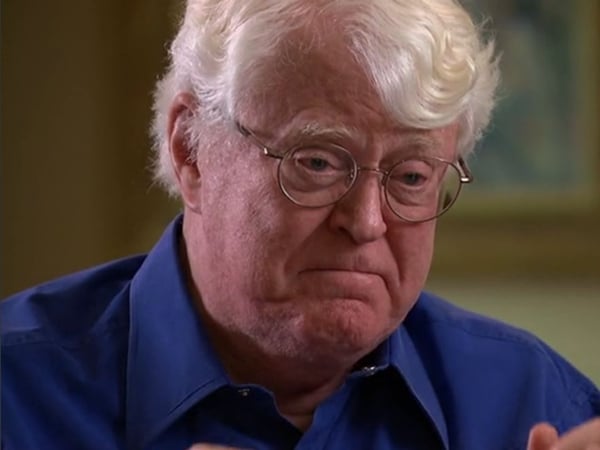
I have been following Bill Koch for a number of years on my blog. My last post regarding him discussed if he was getting forced out of the company he founded and if was running out of money and selling assets to finance his lifestyle. It appears Bill Koch is now being forced to sell his company (that he created after he left Koch Industries and then filed a lawsuit against Charles and David Koch).
Recently, 178 page court decision from Delaware Chancery Court judge Travis Laster ruled that Bill Koch couldn't block Crestview Partners (a private equity firm) from cashing out its investment in Oxbow Carbon. This decision could put the Oxbow Carbon into a receiver supervised sale.
Originally on May 1, 2007 Oxbow executed a deal that would allow Crestview to have a 23% equity interest in Oxbow for $190 million. Oxbow contributed $483 million which represented a 59% interest. In addition to this Bill Koch's family made contributions too. The Wyatt I. Koch 2000 Trust, the William I. Koch Family Trust (created in 1976 to benefit his daughter Charlotte Koch-who is now in her early 20's), even Koch's ex wife Joan Granlund contribute (he at one point in his past tried to juggle three different women at once). Oxbow along with the Koch family owned 67% of equity in the transaction.The Operating Agreement of Oxbow allowed all Koch members to have participation rights with the issuance of new equity. Below is a table that explains the ownership

In January 2011 when Oxbow would acquire a sulfur company the board would approve offering equity to the Koch family and sulfur executives at $300/share (this would represent only a 1.4% interest in Oxbow). Barry Volpert of Crestview would testify that Oxbow didn't need to issue equity to raise capital and didn't help Oxbow to do anything.
The deal would allow Crestview a "put option" to repurchase the remaining shares at fair market market value. This would allow Crestview to sell its shares back to Oxbow. If however, Oxbow declined to purchase the shares then Crestview had the right to have an exit sale of Oxbow. Crestview believed they could sell shares for $283-$452/share in an exit sale and estimated the company would earn $566 million EBITDA (earnings before income taxes and depreciation). Morgan Stanley believed that Oxbow could perform an IPO for $400/share and ultimately trade for $500/share. Oxbow was a pretty successful company earning $571 million in 2011. However, Koch in this video would say that in 2013 his profits were down 40%.
By 2013 Oxbow employee Brian Bilnoski noted that if Oxbow couldn't buyout minority shareholders with debt Oxbow would be at the mercy of the minority shareholders in terms of timing. At the time Bilnoski believed the shares were worth $217/share. In 2014 Koch tried to find new capital to redeem Crestview's interest. Koch had trusted Christine Wing O'Donnell for this task of finding new capital. She is a graduate of Southern Methodist University and Harvard Business School personally worked at a family office for Bill Koch that consisted of over 60 full time employees. O'Donnell would set the strategy for estate planning, investment management, and charitable giving. She would manage the investments, monitor private trust, create family limited partnerships, and would help create a private trust company. Koch even gave Christine full authority to use his private plane-which other Oxbow executives frowned upon.
In 2014 Steve Fried left Oxbow as Chief Operating Officer and Koch replaced the position with Eric Johnson (who at the time was also on the verge of resigning. Eric Johnson would then be promoted to President (he started the position in 2015-after having been with the company for 11 years) of Oxbow Carbon and actually worked at Koch Industries from 1990-1998. Actually Johnson liked Crestview and even had a "man crush on the Crestview guys". O'Donnell and Eric Johnson along with Crestview Partners didn't believe Bill Koch was the best person to run Oxbow. Bill Koch who has been through many court battles in his time would use surveillance in his own home and within his Oxbow office to capture evidence on Oxbow executives and Crestview Partners. Koch even hired a former FBI agent to engage in private investigation.
By March 2015 Eric Johnson told Crestview Partners that he believed that $18 million could be cut in annual expenses from Oxbow. The cut in expenses would come from cutting back the reimbursements the company was providing to fund Bill Koch's lifestyle. Koch would have Oxbow reimburse him for his $5.3 Dassault Falcon private jet, private school tuition (Oxbridge Academy-a school he founded), entertainment, wine, liquor, even payments to relatives, former employees, and business associates. Most corporations don't allow this as they don't want to allow company funds to be commingled with personal funds.
Realizing that he needed capital to fend off a possible put option or forced sale Koch then wanted O'Donnell to raise capital (but not talk to Crestview). O'Donnell went behind Koch's back and e-mailed, texted, and called Crestview and did not inform Koch on what she was doing. O'Donnell and Johnson would talk to other firms and would tell firms that Koch was willing to transition his role of CEO to Johnson (which he wasn't) and sell equity to give up control (which he wasn't). O'Donnell didn't believe Koch was the best pitch person and felt that bringing him to possible investor meetings would make investors loose enthusiasm. As O'Donnell ran Koch's family office she even offered to have Quenntin Chu personal expenses for Koch. Chu who holds a CFA (Chartered Financial Analyst) designation and became a partner at Crestview in 2012 after starting at the firm in 2005 and graduated from Harvard Business School. Koch picked up that a coup within his own company and by June 2015 told Christina O'Donnell and Eric Johnson they were no longer involved (more on both of their futures at Oxbow later). By this point Koch was trying to prevent Crestview from exercising their put option. Morgan Stanley recommend that Oxbow in July 2015 would need to raise money immediately and that a if Crestview exercised the put option it would impact the marketability of the shares which would lead to a fire sale of Oxbow Carbon. During this time Koch would engage in multiple amendments to try to prolong and stall Crestview from exercising their put option.
Well on September 28, 2015 Crestview went ahead and pulled the trigger on their put option and wanted Oxbow to purchase their shares. The appraised value of the shares were only $256.56/share Koch would then hire Goldman (which is interest on many levels because they were brought in for valuations during the Koch vs. Koch trial and they were also the same company that many Crestview partners would come from). Advisors to Koch said he could avoid the put option by taking Oxbow public (brother Charles Koch said Koch Industries would go public literally over his dead body) or merging with another large public company. Also Koch advisors told him the shares were only worth $145/share. Because there was such a difference between Crestview and Oxbow regarding the valuations the agreements stipulated that a third party would have to come in to evaluate the fair market value.
By January 14, 2016 Moelis believed that Oxbow had an enterprise value of $2.65 billion which would be equal to $169/share. A day after this valuation was determined the Oxbow board would meet to discuss their options. Koch wanted to sue or devise a legal strategy to avoid the forced sale. A day after the Oxbow board meeting Crestview went for the whole enchilada by exercising the exit right sale. By this time Christina O'Donnell also was getting fed up with Koch and even sent an e-mail to Eric Johnson stating they should "take his company from him quickly, not a day of relief, put him through the hell he put [them] through, let's find the $30 million of cost savings if he's not running it..."Let's take his plane, his job, and when it's over drink his wine before you taking me dancing". At this point Johnson and O'Donnell would try to ambush Koch and worked with Crestview to do so. O'Donnell would meet with other companies and even provided signed confidentiality agreements to Crestview. Well Koch would then learn of these tactics and fired O'Donnell in February 2016 and remove her from the Oxbow board. Koch also fired Oxbow's general counsel Michael McAuliffe as well. Crestview then came up with a value of Oxbow of $2.4 billion and worked with another firm (ArcLight) to purchase 100% of Oxbow's equity for $176/share with the offering expiring on March 22, 2016.
In April 6, 2015 Oxbow met with Goldman Sachs and the Oxbow board authorized Goldman to proceed with the broad sales process. Koch would attempt to micromanage Goldman and his own Oxbow executives by not allowing them to talk to any potential investors or provide them with any information (including most importantly gossip). Goldman Sachs would say that it was the "most constrained" process they would ever encounter in their long history. Crestview managing director Robert Hurst would say that Koch was paranoid regarding the control of Oxbow. Koch would then tell Oxbow executives to provide a dim future outlook for Oxbow when talking to potential buyers. He even instructed the CFO to tell Oxbow executives to tell certain executives to dampen their forecasts or they would possibly loose their bonuses (at most companies Bill Koch would be fired for ordering this). By June 2016 Koch would fire Eric Johnson just before a board meeting. The best part of the meeting was when Koch told his attorneys to file lawsuits against Crestview and another shareholder (while the meeting was in progress). Potential buyer ArcLight said with an impending lawsuit they would not buy in.
In February 18, 2018 decision from judge Travis Laster approved the possibility of an exit sale of Oxbow. This could leave Oxbow in a position where a receiver is appointed to oversee the process between the two parties. Laster pointed out that Oxbow had taken advantage of unfair gaps and didn't follow certain procedures for covering lapses in the agreements signed. Back in November 2017 Judge Laster even said "Is this likely to end anytime soon?"
On April 10, 2018 the board of directors for Oxbow Carbon LLC proposed a board managed sale for $2.6 billion to comply with the court order to comply with cashing out Crestview Partners and Load Line Capital. This valuation was within the realm of what Crestview and Moleis had came up with when they were evaluating the market value of the company. The next question is what will Bill Koch do after he sells the company that he created? Will he set off into the sunset and work on creating his wild west town? Will he spend more time collecting art and wine? Also questions like how will Bill Koch get health insurance since he probably was covered on a company plan. Perhaps Koch Industries has an opening for him (just kidding).
Saturday, March 24, 2018
Charles and David Koch Historical Net Worth from 1984-2018 (Koch Outperformed S&P 500)

Most recently I blogged about David Koch and his billionaire homes and lifestyle. For a number of years I have updated this analysis to show the net worth for Charles and David Koch (beginning back in 1984). The data came from historical articles (Newsbank database), AP, USA Today, and most recently Forbes magazine.
Forbes ranked Charles and David Koch as each being worth $60 billion. What you can see is a staggering increase in net worth over time. The major source of the growth was after the acquisition of Georgia Pacific (my analysis of that deal here). What you do notice though is although the net worth has increased substantially there is quite some volatility in terms of the the net worth. One way to measure this is standard deviation. The standard deviation from 1984-2018 is roughly 41% for the Koch net worth. To put this in perspective the standard deviation of the Standard & Poor's 500 index is close to 11% (from 1984-2017). This would say that the Koch net worth has been twice as volatile as the stock market. When looking at the return side though the annual compound growth of the Koch net worth is 18%/year while the S&P 500 index (for the same period) was 11%. If you were to compare this on a risk to reward basis (compare the return to the standard deviation) it would say the S&P 500 is a better bet, however the annual difference in the compound growth has made a large difference over time.
If Charles and David Koch said back in 1984 "let's retire and just invest our money in the stock market) they would have invested roughly $375 million each (net worth at the time). Charles in 1984 would have only been 49 years old and David would have been 44 years old. Had those monies been invested in the stock market Charles and David Koch each would have been worth $37 billion each (currently as I write this they are worth $60 billion according to Forbes). This 62% increase represents the reward for the volatility (standard deviation). Also if the Koch brothers had invested those monies in the stock market their dividends would be $680 million (assuming a current 1.86% dividend yield). I estimated that Charles and David Koch each pull in roughly $200 million of dividends per year. Koch Industries has a policy of reinvesting 90% of the earnings back into the company (for capital expenditures, acquisitions, making improvements). According to this article back in 2012 Dave Robertson (President and CEO of Koch Industries) said that Charles Koch "is really focused on the present value of future cash flows, thinking long term". The benefit is the company reinvesting nearly all of the earnings is that the company will continue to grow. The downside is that the cost of growth is not being able to pay out as large of a dividend. Most Fortune 500 companies steadily increase their quarterly dividends to appease shareholders and analysts. However, since Koch Industries is a private company they don't have to disclose their financials. Charles Koch back in this 2006 interview felt "the short term infatuation with quarterly earnings on Wall-Street restricts the earnings potential of Fortune 500 publicly traded companies". Also Koch Industries is much more diversified now than they probably ever been before in their history. Dale Robertson made the comment back in 2012 the company was more diversified at that point than back in 2000 and that a smaller percentage of revenue comes from energy related things (however it is still a significant part of their revenue).
Charles and David Koch has obviously grown Koch Industries to a level they probably never even thought possible. In this 2015 interview Charles Koch said when he first joined Koch Industries he tried to plot out his future success. Koch estimated the growth of Koch Industries out to his retirement and then looking back at his analysis said that in 2013 he exceed his lifetime goal by a 70 fold increase. David Koch in this MSNBC interview said that when he joined the company the revenues were $6 million revenue (when he joined as a salesman in 1970) and recently the revenues were $2 billion (in 2015) which would be near a 14% annual growth rate. It is quite interesting in terms of the growth story that Koch Industries has had. The question is will it continue after Charles and David Koch are no longer at Koch Industries.
If Charles and David Koch said back in 1984 "let's retire and just invest our money in the stock market) they would have invested roughly $375 million each (net worth at the time). Charles in 1984 would have only been 49 years old and David would have been 44 years old. Had those monies been invested in the stock market Charles and David Koch each would have been worth $37 billion each (currently as I write this they are worth $60 billion according to Forbes). This 62% increase represents the reward for the volatility (standard deviation). Also if the Koch brothers had invested those monies in the stock market their dividends would be $680 million (assuming a current 1.86% dividend yield). I estimated that Charles and David Koch each pull in roughly $200 million of dividends per year. Koch Industries has a policy of reinvesting 90% of the earnings back into the company (for capital expenditures, acquisitions, making improvements). According to this article back in 2012 Dave Robertson (President and CEO of Koch Industries) said that Charles Koch "is really focused on the present value of future cash flows, thinking long term". The benefit is the company reinvesting nearly all of the earnings is that the company will continue to grow. The downside is that the cost of growth is not being able to pay out as large of a dividend. Most Fortune 500 companies steadily increase their quarterly dividends to appease shareholders and analysts. However, since Koch Industries is a private company they don't have to disclose their financials. Charles Koch back in this 2006 interview felt "the short term infatuation with quarterly earnings on Wall-Street restricts the earnings potential of Fortune 500 publicly traded companies". Also Koch Industries is much more diversified now than they probably ever been before in their history. Dale Robertson made the comment back in 2012 the company was more diversified at that point than back in 2000 and that a smaller percentage of revenue comes from energy related things (however it is still a significant part of their revenue).
Charles and David Koch has obviously grown Koch Industries to a level they probably never even thought possible. In this 2015 interview Charles Koch said when he first joined Koch Industries he tried to plot out his future success. Koch estimated the growth of Koch Industries out to his retirement and then looking back at his analysis said that in 2013 he exceed his lifetime goal by a 70 fold increase. David Koch in this MSNBC interview said that when he joined the company the revenues were $6 million revenue (when he joined as a salesman in 1970) and recently the revenues were $2 billion (in 2015) which would be near a 14% annual growth rate. It is quite interesting in terms of the growth story that Koch Industries has had. The question is will it continue after Charles and David Koch are no longer at Koch Industries.
Monday, March 19, 2018
David Koch Billionaire Lifestyle and Homes Across America

(the photo is of David Koch in his New York United Nation's Plaza apartment in the 1980's)
In Colorado David owns two homes in Aspen, Colorado (they are actually on the same street). Both of these homes are owned by trusts homes. Generally people who have multiple residences in different states will do this to avoid probate in multiple states. One trust is the "David H Koch 2003 Trust" and the other is just the "David H Koch Trust". The smaller home is 3 bedrooms, 3 and 1/2 baths and roughly 4,000 square feet in size and was purchased for $1.75 million in December 1991 and currently is appraised at $7.1 million. The larger Colorado home features 5 bedrooms, 7 bathrooms and is 9,600 square feet in size and features a finished basement as well. The larger home was purchased in January 1989 for $1.9 million and currently appraised at $15 million in value (the home was remodeled in 2013). Koch in his bachelor days would open his Aspen home to throw some extravagant New Year's Eve parties that would often hundreds of people for the occasion. In 1993 David invited 800 people for New Year's Eve and Newsweek said it was as one of the top parties to crash. Brother Charles also has a home on the same street in Aspen as well. You would think with three Koch homes on the same street they could rename it Koch Drive at least. Charles purchased the home in 1992 for $2.65 million and was recently appraised for $10.7 million. Charles also has a caretaker apartment as part of his home too.
We can't forget the Palm Beach that Mr. Koch owns in Palm Beach. The property is nicknamed El Sarimento. The 32 room home 16,000 square foot home was purchased from David and Julia Koch in 1998 for $10.5 million. Wife Julia then gave the home a $12 million face lift (which included increasing the number of square feet to 30,000). The 2017 property taxes for his Florida residence was ~$638,000. Here are photos of Julia and David that were published in the home from February 2003. The Koch family has even held fundraisers at the home for cancer.
The New York place (his primary residence) is a 9,000 square foot duplex that occupies the fourth and fifth floors of 740 Park Avenue and was purchased for $18 million. The 18 room duplex was purchased in 2003 and it took one year before the Koch family actually moved in because of lavish remodeling. David even poked fun at his wife and her spending habits for remodeling as "there was no budget and she still managed to go over the budget". In April 2016 there was a fire in the apartment (that started in sauna of another apartment tenant that was above). Koch was forced to move his family to a hotel for interim quarters.
The Park Avenue home was purchased after David Koch and his family moved out of the 1040 Fifth Avenue apartment. In 1995 Koch purchased the former home of Jacqueline Kennedy Onassis for $9.5 million. The 1040 Fifth Avenue 15th floor apartment was 5,300 square feet, 5 bedrooms and 1/2 baths. Here are photos after Julia Koch did some remodeling of the apartment and the sketch plans. The apartment also featured three fireplaces, a conservatory, a library, and two terraces. David was quoted as saying "As much as I love the old Jackie Onassis apartment, it wasn't large enough". Koch sold it for $32 million in 2006. Koch and his family had to move out because the area wasn't large enough for David, his wife Julia, his three children, Julia's mother, and the 3 nannies (7 total people). What is interesting is when Koch first purchased the property (he was still single at the time and not yet married to Julia). Around this time in the mid 1990's David (who at the time was 50) was trying to gain membership into the Southampton Bathing Corporation (an exclusive club) and it was speculated he wouldn't gain membership and wouldn't be let in "until he was more stable and had a family". David and Julia were dating at the time and when David purchased the former Jacqueline Kennedy apartment Julia was referred to as the "mistress" of the apartment.
Speaking of New York we can't forget the Southampton home. This roughly 12,000 square foot home has 7 bedrooms and 9 bathrooms. Given the large property size the Koch family also uses plenty of water. His water bill was $34,500 in 2014. Between 2015 and 2016 Koch used 22.5 million gallons of water (he has been the heaviest water user of water in the county for the past 5 years). What is even more interesting is Koch is head of Koch Membrane group which sells equipment to purify water for companies around the world.
According to Sons of Wichita David in his bachelor days was known for having parties at his 7 bedroom, nine-bathroom South Hampton beach house. Actually back in the day he had 5 different properties in the Hampton's. He would be a gracious host offering guests six different types of champagne and serving two meals (dinner and breakfast). Of course not just anyone could get in. In order to secure the party Koch hired 40 security guards to make sure no riff raft would enter.
It is apparent that David Koch lives well and has different homes all across the country. In the late 1990's, David even had a home in Wichita, Kansas. He has been known to charter a yacht which runs $500,000 per week. David also likes fast cars and was quoted in the late 1980's as having a Ferrari but pointed out he didn't have fifteen. Koch said he would rather give his money to charity versus buying "bigger and better paintings". In his free time he enjoys reading: biographies, historical fiction, military history, taking a private jet with his friends to Africa, the Amazon jungle, and the Himalayas. Speaking of reading, in the early 1980's Koch had a subscription to two dozen magazines (not even including technical trade journals). Also during this time period Koch described that during the weekend he would ski, study pollution control designs at his office, attend parties with a girlfriend.
If you look at what David Koch spends compared to his annual income it is actually quite modest. I blogged on this post how my best estimate as to the dividends that Charles and David Koch each receive is $200 million a year. David pointed out in a 1999 article with M.I.T. that he gave away half his income to charity every year. Assuming this living on $100 million per year before taxes isn't too bad (if you back out taxes (Federal and NY state) it would be roughly $50 million of after tax cash flow to live on).
David Koch has worked hard for a number of years to earn this level of income and have this type of wealth (important to remember his net worth is tied up in an non liquid stock since it is privately traded). Back in this 2014 interview he said that he still gets to the office at 9 A.M. but then stays until 7 P.M. and for him 12 hour days are not unusual. Being the executive vice president of a $115 billion company (revenues) is not a 9-5 job. At 77 years old David Koch is still working and not off retired just hanging out by the beach. This work over many decades has afforded him the opportunity to enjoy the amazing growth of Koch Industries and allowed him a life of luxury.
Saturday, March 10, 2018
Case Study: Koch Industries Purchases Georgia Pacific (How Did Koch Do?)
Charles Koch actually bought Georgia Pacific while playing golf. According to "Sons of Wichita" Koch was at The Reserve Club in Indian Wells, California playing golf with brother David Koch and friend John Damgard. Charles was constantly using his cell phone. At one point a guard from the club approached Koch to let him know that the guard would have to turn him in and even get a formal letter of reprimand from the club. It was during this afternoon that Charles bought Georgia Pacific.
Koch had Georgia Pacific on their radar for a while and in 2003 met to discuss a possible future together. According to SEC filings in 2003 Georgia Pacific earned a net income of $254 million in 2003 (in the two prior years the company lost $735 million, and $477 million respectively. The company in the first quarter of 2004 earned $147 million. The company in 2004 had a net income of $623 million. Georgia Pacific chairman A.D. "Pete" Carroll was excited that given Koch was a private company they wouldn't be subject to the onerous reporting requirement under the Sarbanes Oxley Act and the 47 other regulatory requirements.
The deal would allow for Koch to increase their revenues from $60 billion to $80 billion. Georgia Pacific had 55,000 employees with 40% who were members of unions). Including debt Koch would purchase Georgia Pacific for $21 billion in December 2005 (the price was a 39% premium for the shares). David Koch was quoted as saying "We are all staggered by the size of it". Koch would grow from 55,000 employees to 85,000 employees with the acquisition. Georgia Pacific was primarily involved in paper products (Brawny paper towel, Dixie cups, paper towels in commercial building restrooms, and toilet paper) construction materials to build homes (plywood and oriented strand board-if you ever see construction you might see a GP label), and packaging (boxes).Georgia Pacific customers included companies like Wal-Mart, Target, Home Depot, and Kroger. David Koch said Koch Industries would reinvest the cash flow into improving and upgrading Georgia Pacific's manufacturing facilities and help Georgia Pacific operate more efficiently.
Koch usually takes on partial ownership before offering to buy full companies. Koch in 2004 purchased the pulp industry business from Georgia Pacific for $610 million (pulp sales in 2004 were $74 million). By the next year Koch would be ready to purchase all of Georgia Pacific for $21 billion (so all in the deal was closer to $22 billion). The $21 billion deal was financed by mostly debt (Citigroup underwrote the loan for $11 billion-JPMorgan and Deutsche Bank helped in the financing too) with Koch only contributing $2.2 billion of cash. The debt deal reduced the underlying credit rating of Georgia Pacific from BB+ to BB- (Georgia Pacific in 2017 had their credit rating upgraded to A3). As mentioned in the ABKO deal (which was done in the late 1970's) Koch also put in little equity (if roughly 10%) and the deal was mostly financed with debt.
Charles Koch in this rare one hour video interview says that he "heard [GP] wanted to get into consumer products and out of the commodity business so their multiple would go up". Koch wanted to buy all the non consumer product businesses however Koch couldn't because Georgia Pacific had asbestos liabilities and the attorneys wouldn't let Koch pick and choose which pieces they purchased (this would be known as fraudulent transfer). Georgia Pacific would only allow the deal if Koch purchased the whole company.
Georgia Pacific would notice changes after Koch acquired them. Koch Industries has a history of reinvesting 90% of the earnings back into a business. Georgia Pacific was not reinvesting much of their profits back into the business. The company would let machines run as long as possible without shutting them down (which was dangerous and led to injuries). Koch would also cut out the dividends that Georgia Pacific was paying investors. In 1Q 2005 Georgia Pacific actually increased their dividend by 40% . Koch believes that paying out small dividends and reinvesting more into the business the business can grow over time.
Charles Koch in Good Profit wrote that when Koch took over Georgia Pacific the company Koch "its safety performance improved under [Market Based Management], lowering the return on the capital to low single digits". Georgia Pacific was an old school company that had many layers of bureaucracy. After Koch took over Georgia Pacific employees were given much more authority to make decisions. When Wesley Jones who ran the Georgia Pacific-pulp mills wanted to install more efficient processing towers at a plant and asked for approval he was surprised when the $35 million capital expenditure was quickly approved (over the phone too). Usually at large companies spending this type of money would need to go through committees with feasibility studies and only certain managers can approve. Companies usually specify the threshold a manager can approve (example: authority to only approve an expenditure up to $1 million). Koch even offers incentives to employees that work at the shop level to improve their efficiency. In addition to also pushing down the level of authority there was also was an emphasis on safety. At the Georgia Pacific Green Bay Broadway Mill after an accident at the mill the number of annual recordable injuries declined from 37 incidents to 7 over a 3 year period, equipment failure dropped by 50%, and productivity increased by 20% per employee.
The Georgia Pacific deal helped moved the needle for Koch Industries. The large acquisition helped Koch add new capabilities that they previously had. Koch bought Georgia Pacific with very little equity-only putting down 10% cash for the deal and borrowing to pay the rest. To be honest I was surprised that Koch used so much debt to purchase companies. Borrowing can help companies grow in good times but in bad times or if interest rates dramatically increase they can be a real issue.
At the time of the Georgia Pacific acquisition Charles and David Koch were each worth roughly $4.5 billion-from Forbes). As I write this Bloomberg Billionaires Index lists the net worth of Charles Koch at roughly $47 billion. Forbes as I write lists his net worth at close to $60 billion. Bloomberg does a good job of breaking out the net worth into different divisions of Koch Industries. Charles and David Koch each own 42% of Koch Industries. The asset breakout on Bloomberg lists $12.5 billion for Georgia Pacific. Assuming the $12.5 billion for Georgia Pacific represents a 42% interest in Koch Industries then it would say 100% of Georgia Pacific would be worth roughly $30 billion. Given Koch paid $22 billion back in 2005 that is now is worth $30 billion isn't bad. However, when looking at the deal from a growth rate perspective the deal isn't as good as it appears. Over a 13 year period this would represent a growth rate of roughly 2.4%/year which is under the normal 6%/year growth on average (Koch tries to double earnings every 6 years).
The moral of this story is Koch purchased Georgia Pacific-changing the culture, investing capital, cutting dividends (as Koch reinvests 90% of their earnings back into the company), and it helped Koch grow. However, Georgia Pacific itself has not grown as quickly as the rest of Koch Industries.
Monday, February 19, 2018
Oxbow Carbon vs. Crestview Partners LP and The Oxbow Bill Koch Corporate Coup

I have been following Bill Koch for a number of years on my blog. My last post regarding him discussed if he was getting forced out of the company he founded and if was running out of money and selling assets to finance his lifestyle. It appears Bill Koch is one step closer to being forced to sell Oxbow Carbon.
Most recently in a 178 page court decision from Delaware Chancery Court judge Travis Laster ruled that Bill Koch couldn't block Crestview Partners (a private equity firm) from cashing out its investment in Oxbow Carbon. This decision could put the Oxbow Carbon into a receiver supervised sale.
Originally on May 1, 2007 Oxbow executed a deal that would allow Crestview to have a 23% equity interest in Oxbow for $190 million. Oxbow contributed $483 million which represented a 59% interest. In addition to this Bill Koch's family made contributions too. The Wyatt I. Koch 2000 Trust, the William I. Koch Family Trust (created in 1976 to benefit his daughter Charlotte Koch-who is now in her early 20's), even Koch's ex wife Joan Granlund contribute (he at one point in his past tried to juggle three different women at once). Oxbow along with the Koch family owned 67% of equity in the transaction.The Operating Agreement of Oxbow allowed all Koch members to have participation rights with the issuance of new equity. Below is a table that explains the ownership
In January 2011 when Oxbow would acquire a sulfur company the board would approve offering equity to the Koch family and sulfur executives at $300/share (this would represent only a 1.4% interest in Oxbow). Barry Volpert of Crestview would testify that Oxbow didn't need to issue equity to raise capital and didn't help Oxbow to do anything.
The deal would allow Crestview a "put option" to repurchase the remaining shares at fair market market value. This would allow Crestview to sell its shares back to Oxbow. If however, Oxbow declined to purchase the shares then Crestview had the right to have an exit sale of Oxbow. Crestview believed they could sell shares for $283-$452/share in an exit sale and estimated the company would earn $566 million EBITDA (earnings before income taxes and depreciation). Morgan Stanley believed that Oxbow could perform an IPO for $400/share and ultimately trade for $500/share. Oxbow was a pretty successful company earning $571 million in 2011. However, Koch in this video would say that in 2013 his profits were down 40%.
By 2013 Oxbow employee Brian Bilnoski noted that if Oxbow couldn't buyout minority shareholders with debt Oxbow would be at the mercy of the minority shareholders in terms of timing. At the time Bilnoski believed the shares were worth $217/share. In 2014 Koch tried to find new capital to redeem Crestview's interest. Koch had trusted Christine Wing O'Donnell for this task of finding new capital. She is a graduate of Southern Methodist University and Harvard Business School personally worked at a family office for Bill Koch that consisted of over 60 full time employees. O'Donnell would set the strategy for estate planning, investment management, and charitable giving. She would manage the investments, monitor private trust, create family limited partnerships, and would help create a private trust company. Koch even gave Christine full authority to use his private plane-which other Oxbow executives frowned upon.
In 2014 Steve Fried left Oxbow as Chief Operating Officer and Koch replaced the position with Eric Johnson (who at the time was also on the verge of resigning. Eric Johnson would then be promoted to President (he started the position in 2015-after having been with the company for 11 years) of Oxbow Carbon and actually worked at Koch Industries from 1990-1998. Actually Johnson liked Crestview and even had a "man crush on the Crestview guys". O'Donnell and Eric Johnson along with Crestview Partners didn't believe Bill Koch was the best person to run Oxbow. Bill Koch who has been through many court battles in his time would use surveillance in his own home and within his Oxbow office to capture evidence on Oxbow executives and Crestview Partners. Koch even hired a former FBI agent to engage in private investigation.
By March 2015 Eric Johnson told Crestview Partners that he believed that $18 million could be cut in annual expenses from Oxbow. The cut in expenses would come from cutting back the reimbursements the company was providing to fund Bill Koch's lifestyle. Koch would have Oxbow reimburse him for his $5.3 Dassault Falcon private jet, private school tuition (Oxbridge Academy-a school he founded), entertainment, wine, liquor, even payments to relatives, former employees, and business associates. Most corporations don't allow this as they don't want to allow company funds to commingle with personal funds.
Realizing that he needed capital to fend off a possible put option or forced sale Koch then wanted O'Donnell to raise capital (but not talk to Crestview). O'Donnell went behind Koch's back and e-mailed, texted, and called Crestview and did not inform Koch on what she was doing. O'Donnell and Johnson would talk to other firms and would tell firms that Koch was willing to transition his role of CEO to Johnson (which he wasn't) and sell equity to give up control (which he wasn't). O'Donnell didn't believe Koch was the best pitch person and felt that bringing him to possible investor meetings would make investors loose enthusiasm. As O'Donnell ran Koch's family office she even offered to have Quenntin Chu personal expenses for Koch. Chu who holds a CFA (Chartered Financial Analyst) designation became a partner at Crestview in 2012 after starting at the firm in 2005 and graduated from Harvard Business School. Koch picked up that a coup within his own company and by June 2015 told Christina O'Donnell and Eric Johnson they were no longer involved (more on both of their futures at Oxbow later). By this point Koch was trying to prevent Crestview from exercising their put option. Morgan Stanley recommend that Oxbow in July 2015 would need to raise money immediately and that a if Crestview exercised the put option it would impact the marketability of the shares which would lead to a fire sale of Oxbow Carbon. During this time Koch would engage in multiple amendments to try to prolong and stall Crestview from exercising their put option.
Well on September 28, 2015 Crestview went ahead and pulled the trigger on their put option and wanted Oxbow to purchase their shares. The appraised value of the shares were only $256.56/share Koch would then hire Goldman (which is interest on many levels because they were brought in for valuations during the Koch vs. Koch trial and they were also the same company that many Crestview partners would come from). Advisors to Koch said he could avoid the put option by taking Oxbow public (brother Charles Koch said Koch Industries would go public literally over his dead body) or merging with another large public company. Also Koch advisors told him the shares were only worth $145/share. Because there was such a difference between Crestview and Oxbow regarding the valuations the agreements stipulated that a third party would have to come in to evaluate the fair market value.
By January 14, 2016 Moelis believed that Oxbow had an enterprise value of $2.65 million which would be equal to $169/share. A day after this valuation was determined the Oxbow board would meet to discuss their options. Koch wanted to sue or devise a legal strategy to avoid the forced sale. A day after the Oxbow board meeting Crestview went for the whole enchilada by exercising the exit right sale. By this time Christina O'Donnell also was getting fed up with Koch and even sent an e-mail to Eric Johnson stating they should "take his company from him quickly, not a day of relief, put him through the hell he put [them] through, let's find the $30 million of cost savings if he's not running it..."Let's take his plane, his job, and when it's over drink his wine before you taking me dancing". At this point Johnson and O'Donnell would try to ambush Koch and worked with Crestview to do so. O'Donnell would meet with other companies and even provided signed confidentiality agreements to Crestview. Well Koch would then learn of these tactics and fired O'Donnell in February 2016 and remove her from the Oxbow board. Koch also fired Oxbow's general counsel Michael McAuliffe as well. Crestview then came up with a value of Oxbow of $2.4 billion and worked with another firm (ArcLight) to purchase 100% of Oxbow's equity for $176/share with the offering expiring on March 22, 2016.
In April 6, 2015 Oxbow met with Goldman Sachs and the Oxbow board authorized Goldman to proceed with the broad sales process. Koch would attempt to micromanage Goldman and his own Oxbow executives by not allowing them to talk to any potential investors or provide them with any information (including most importantly gossip). Goldman Sachs would say that it was the "most constrained" process they would ever encounter. Crestview managing director Robert Hurst would say that Koch was paranoid regarding the control of Oxbow. Koch would then tell Oxbow executives to provide a dim future outlook for Oxbow when talking to potential buyers. He even instructed the CFO to tell Oxbow executives to tell certain executives to dampen their forecasts or they would possibly loose their bonuses (at most companies Koch would be fired for ordering this). By June 2016 Koch would fire Eric Johnson just before a board meeting. The best part of the meeting was when Koch told his attorneys to file lawsuits against Crestview and another shareholder (while the meeting was in progress). Potential buyer ArcLight said with an impending lawsuit they would not buy in.
The recent February 18, 2018 decision from judge Travis Laster approved the possibility of an exit sale of Oxbow. This could leave Oxbow in a position where a receiver is appointed to oversee the process between the two parties. Laster pointed out that Oxbow had taken advantage of unfair gaps and didn't follow certain procedures for covering lapses in the agreements signed. Back in November 2017 Laster said "Is this likely to end anytime soon?" The next step is to allow both parties until the mid March 2018 to allow the parties involved to submit a joint letter to inform the court of any other matters that need to be addressed to bring the case to a close.
I plan to update this post for future developments.
Saturday, February 17, 2018
Case Study: Koch Industries ABKO Deal with Chrysler
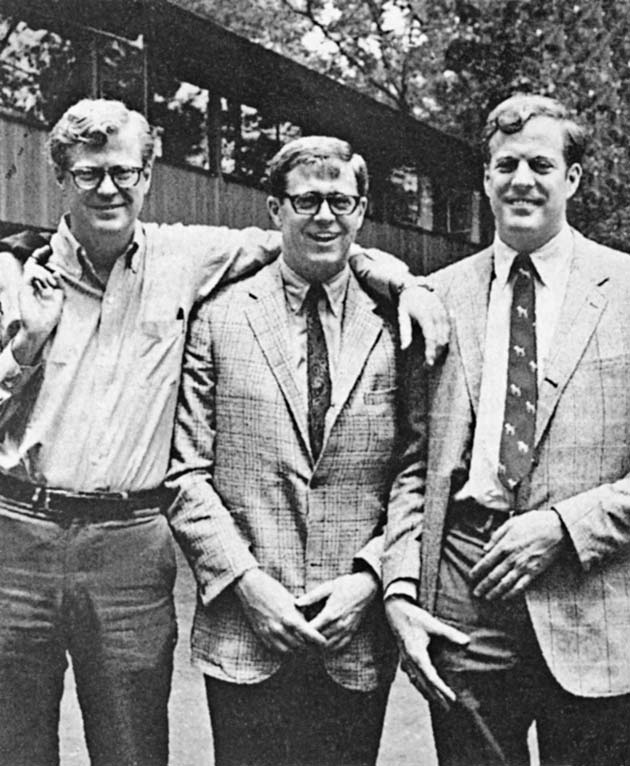
Koch Industries today is a diversified company that is involved in oil/gas refining, paper products, technology, even has their own private investment group to evaluate providing capital to companies. Many people may not know but Koch Industries was actually in the car dealership business back in the 1970's. Chrysler back in the late 1970's decided that it wanted to sell Chrysler Realty Corporation. As part of the Koch vs. Koch lawsuit the Chrysler deal is mentioned in the testimony and the summary can be found here. (The photo above is Bill Koch, Charles Koch, and David Koch).
In September 1979 Koch Industries and George Ablah a land developer from Wichita, Kansas formed a partnership called ABKO. George Ablah who was known as a real estate magnate in the Wichita area and known for constructing shopping malls and developing commercial real estate. George knew Charles Koch (who at that time was only 43 years old) and ABKO Realty was structured to be 50% /50% deal between Ablah and Koch Industries. The name came from from the first two letters of Ablah and well the KO came from a well known oil and company. Charles Koch is known to be a good negotiator and it was even commented that he will negotiate the hyphen in a 50-50 deal. One of the reasons for using the name was a named that could be used in all 50 states. According to Ablah the purpose of the deal was "an opportunity in our eyes to accumulate a lot of real estate in one purchase, and use it as a base to grow". The concept of ABKO was to sell the dealerships that they purchased from Chrysler realty, reduce the overall debt, and then attempt to diversify out of the real estate holdings. ABKO would establish a grade for each property purchased and rate the properties between a grade of A-D to decide which properties to sell and which properties to keep.Actually George was able to start his real estate career when he used the name of Fred Koch of a reference on a bank loan. Charles Koch would refer to Ablah as the second best business partner he ever had (the first was his wife).
The ABKO partnership would allow Koch Industries and George Ablah to purchase Chrysler Realty stock for a cash price of $70 million (after credits) in September 1979. In the late 1970's Chrysler owned 4,730 dealerships throughout the United States and by Chrysler Realty in 1978 earned about $13 million. However by 1979 the Chrysler was in financial trouble and on the verge of bankruptcy needed a $1 billion from the U.S. federal government. What Koch purchased was 556 Chrysler dealerships and 245 leased Chrysler dealerships. The $70 million deal was financed mostly with debt as Koch contributed only $7 million and the remainder of the monies were financed either by Koch Industries financing or from money borrowed from The First National Bank of Chicago. George Ablah personally guaranteed $29 million of the loan in the deal.
ABKO would trade 26 Chrysler dealerships for an office building called "Blue Hill". Blue Hill was an office building in New York that only had a occupancy rate of 19% (typically buildings with an occupancy rate of less than 80% are in trouble). The swap for the Blue Hill office building was roughly $25 million. Blue Hill later would be sold by George Ablah in June 1985 for $100 million. Ablah took on more debt from First Chicago and Chemical bank to make massive capital improvements into Blue Hill and increased the occupancy level to the highest it had ever been. Selling Blue Hill would give Ablah a net gain of $29 million. Taking on debt would catch up to George though. In 1992 George and his wife would file for bankruptcy after changes in federal and state tax rules in the 1980's and early 1990's.
By year end 1981 ABKO was showing results. The entity was able to sell 250 dealerships and realized an after tax income of $34 million ($28 million was paid out as a dividend) and paid down a large portion of the debt owed. Realizing that the economic situation had improved by 1981 Chrysler was interested in repurchasing some of the dealerships owned by ABKO. In 1982 Chrysler and ABKO negotiated a purchase price of $119 million. By this time there were 521 dealerships remaining and Chrysler would purchase 336 of the remaining dealerships from ABKO and sign a 15 year lease on 110 dealerships. The rental income that was generated from the 110 properties had been $11.5 million . The early 1980's were good to Koch Industries. Koch Industries in 1981 had roughly $17 billion in revenue and earn $309 million (a 20% increase from the prior year in earnings). In 1982 Koch Industries would have $309 million in net earnings.
However, by April 1982 George Ablah was getting worried about the future of ABKO due to the controversy between Koch Industries and the lawsuit between the Koch brothers. Ablah in a 7 page memo felt it was hard to do any type of future planning for ABKO due to the lawsuit (he even mentioned he believed he didn't believe William Koch and the other dissenter shareholders liked him). It was at this point that a split up between Koch Industries and ABKO would occur
On September 20, 1982 Ablah and Charles Koch met to discuss the liquidation of ABKO. It was believed that the after-tax value of the company would be worth $90 million (remember the purchase was $70 million). In addition to this, Blue Hill would be worth another $26 million. These of course were preliminary talks and estimates. Charles felt the Ablah should stay until most of the properties had been sold. Also Charles felt it was too early to come to a final agreement since he felt the evaluation of ABKO wasn't complete. By October 1982 (this would be the month Bill Koch and other dissenter shareholders would file a lawsuit) Koch had finalized a proposed transaction and bought out George Ablah's 50% interest in ABKO for $45 million.
The analysis of the possible deal was completed in early October and then proposed at the October 19, 1982 board of meeting. Koch board of directors meeting included Charles Koch, David Koch, Sterling Varner, and Howard Marshall III. A 30 page executive report was created that outlined the proposal, the history of ABKO, and other pertinent financial information. When taking into account the present value of the properties the executive committee report came up with a value between $84-$89 million. The deal would have Koch Industries purchase Ablah's 50% interest in ABKO for roughly $45 million. In last minute revisions of the deal Koch would give Ablah two airplanes (a Lear and Citation jet debt free-however this would reduce the cash he would receive).
The Koch Industries board approved the deal November 6, 1982 (this would be a Saturday-in this Wichita Eagle article it is discussed how Koch Industries executives were expected would work all day Saturday-even into Saturday night). During that Saturday meeting William Koch would testify that the calculations and the outcome of the ABKO deal weren't obvious from the report provided from the 30 page executive report). William would end up retaining evidence of what Koch Industries was doing by keeping files on meeting notes, exploration maps, and files on 37 different subject matters.William asked older brother Charles what the future plans were and Charles responded that there were no final plans and they would probably sell the "bad" properties and keep the good properties for the income stream and continue to evaluate in the future.
Between 1982-1985 with the economy improving Chrysler was also improving and Chrysler was more interested in the remaining dealerships increased. The stock price of Chrysler increased from $11/share in 1982 to $37/share in 1985. Between 1982-1983 Koch would sell 30 more dealership properties for $30 million. For the 1Q 1983 ABKO (which was under Koch Properties) had annualized cash flow of $2 billion. By early 1984 Koch believed that the remaining properties should be sold for an amount equal to what Koch Industries could earn on other investments (Koch believed this was 8%/after taxes/after debt). In October 1985 Chrysler agreed to purchase 56 properties from ABKO for $110 million (Koch believed the properties were worth $98 million (based on report shown to the Koch Industries board of directors) so asked for $135 million). The $110 million was paid to Koch over a 10 year period using a long term note paying 12%.
This case study is a great example of how Koch Industries evaluates their deal making process. Honestly it was shocking to me how much little equity Koch had in the ABKO deal. Koch's capital contributions were only $7 million out a $70 million deal. $63 million of the deal was either financed by Koch Industries or by banks. The deal overall turned out to be good for Koch Industries and George Ablah. Koch purchased Chrysler Realty stock for $70 million in 1979 and then sold properties over time earning $34 million in after-tax profits in 1982, sold properties for $30 million between 1982-1983 and then selling the remainder of the properties for $110 million in 1985. It is hard to know exactly how much money was made on the deal however it is clear that Koch Industries and George Ablah clearly did well on the ABKO deal.
On September 20, 1982 Ablah and Charles Koch met to discuss the liquidation of ABKO. It was believed that the after-tax value of the company would be worth $90 million (remember the purchase was $70 million). In addition to this, Blue Hill would be worth another $26 million. These of course were preliminary talks and estimates. Charles felt the Ablah should stay until most of the properties had been sold. Also Charles felt it was too early to come to a final agreement since he felt the evaluation of ABKO wasn't complete. By October 1982 (this would be the month Bill Koch and other dissenter shareholders would file a lawsuit) Koch had finalized a proposed transaction and bought out George Ablah's 50% interest in ABKO for $45 million.
The analysis of the possible deal was completed in early October and then proposed at the October 19, 1982 board of meeting. Koch board of directors meeting included Charles Koch, David Koch, Sterling Varner, and Howard Marshall III. A 30 page executive report was created that outlined the proposal, the history of ABKO, and other pertinent financial information. When taking into account the present value of the properties the executive committee report came up with a value between $84-$89 million. The deal would have Koch Industries purchase Ablah's 50% interest in ABKO for roughly $45 million. In last minute revisions of the deal Koch would give Ablah two airplanes (a Lear and Citation jet debt free-however this would reduce the cash he would receive).
The Koch Industries board approved the deal November 6, 1982 (this would be a Saturday-in this Wichita Eagle article it is discussed how Koch Industries executives were expected would work all day Saturday-even into Saturday night). During that Saturday meeting William Koch would testify that the calculations and the outcome of the ABKO deal weren't obvious from the report provided from the 30 page executive report). William would end up retaining evidence of what Koch Industries was doing by keeping files on meeting notes, exploration maps, and files on 37 different subject matters.William asked older brother Charles what the future plans were and Charles responded that there were no final plans and they would probably sell the "bad" properties and keep the good properties for the income stream and continue to evaluate in the future.
Between 1982-1985 with the economy improving Chrysler was also improving and Chrysler was more interested in the remaining dealerships increased. The stock price of Chrysler increased from $11/share in 1982 to $37/share in 1985. Between 1982-1983 Koch would sell 30 more dealership properties for $30 million. For the 1Q 1983 ABKO (which was under Koch Properties) had annualized cash flow of $2 billion. By early 1984 Koch believed that the remaining properties should be sold for an amount equal to what Koch Industries could earn on other investments (Koch believed this was 8%/after taxes/after debt). In October 1985 Chrysler agreed to purchase 56 properties from ABKO for $110 million (Koch believed the properties were worth $98 million (based on report shown to the Koch Industries board of directors) so asked for $135 million). The $110 million was paid to Koch over a 10 year period using a long term note paying 12%.
This case study is a great example of how Koch Industries evaluates their deal making process. Honestly it was shocking to me how much little equity Koch had in the ABKO deal. Koch's capital contributions were only $7 million out a $70 million deal. $63 million of the deal was either financed by Koch Industries or by banks. The deal overall turned out to be good for Koch Industries and George Ablah. Koch purchased Chrysler Realty stock for $70 million in 1979 and then sold properties over time earning $34 million in after-tax profits in 1982, sold properties for $30 million between 1982-1983 and then selling the remainder of the properties for $110 million in 1985. It is hard to know exactly how much money was made on the deal however it is clear that Koch Industries and George Ablah clearly did well on the ABKO deal.
Friday, December 22, 2017
Koch Industries is A C Corporation (Not An S Corporation)

Through searching business filings with the state of Kansas I came across filings that Koch Industries had filed with the state (going back to the original article of incorporation in 1940). Wood River Oil and Refining Company (predecessor to Koch Industries) back in 1940 (started by Fred Koch and partners) was funded with $15 million of capital and only had common stock of 16,000 shares. Then on July 20, 1959 Wood River Oil and Rock Island Oil and Refining merged together. After the merger the company had a total capital amount of $10 million. Charles Koch would grow the company year in and out by reinvesting 90% of the earnings back into the company. As the company grew all the number of common shares would grow but the company would also offer preferred stock as well. S Corporations are not able to have multiple classes of shares (preferred and common stock). Having different classes of stock would revoke the S Corporation and cause a large tax bill as well. C Corps are able to have multiple classes of shares. Since Koch industries offers different share classes (preferred and common) they would most likely be a C-Corp.
The last report in 2004 breaks out the the preferred/common stock amounts. The company has 57,922,925.623 common non voting shares along with 276,524.2 voting shares which puts the total common shares at ~58.2 million shares. Koch Industries has authorized (or the capacity) to issue close to 133 million common shares. The company also has the capacity to issue 251,000 preferred shares as well (non-voting as well as cumulative voting shares as well). Charles and David Koch each own 42% of Koch Industries which would mean they would together own roughly 49 million common shares of Koch Industries.
This finally puts to rest the notion that Koch Industries is some type of pass through entity (LLC or S Corporation) to Charles and David Koch. Also remember that a C-Corp faces double taxation as well since the corporation is taxed first at the company level and then any dividends that are paid out are taxed to the shareholder. I do wonder though if Charles Koch started the company from scratch if he would still choose a C-Corp or want to set up Koch Industries LLC (as an S-Corp).
Thursday, December 21, 2017
Republican Tax Cut: What Does This Mean for Koch Industries Inc. and "Koch Brothers"

Recently, I have heard all sorts of claims in terms of how the recent Republican tax bill will affect the "Koch brothers". Senator Bernie Sanders remarked "Congratulations to the Koch brothers, massive, corporations, and billionaire campaign contributions on looting the Treasury and working families". I decided to look deep to see how the tax bill would impact Koch Industries and the "Koch brothers" by doing some back of the envelope calculations.
For many years I have published many blog posting on Koch Industries and Charles and David Koch and still am not sure how Koch Industries is structured (whether it is formed as an S Corporation or C Corporation). Well my blog is the first to break this but Koch Industries is actually a C Corporation. The company filled articles of incorporation with the state of Kansas here and the articles of incorporation date back to 1949 when Fred Koch originally founded the company. If you look under the 2004 Koch Annual Report on page 3 the number of common and preferred shares are shown. This is important because a S Corporation (pass through entity) can't have multiple classes of stock . If an S Corp does have multiple classes of stock the company would terminate the S Corp status and subject the corporate tax on the net income to shareholders on the net income and the shareholders would also be taxed on the distributions of income. Due to the multiple share classes Koch Industries would only be able to be classified as a C-Corporation (also the Inc. in Koch Industries Inc. is a giveaway too). Also given the company was formed in the 1940's and the S Corporation election wasn't even available until 1958.
With regard to the impact for Koch Industries Inc. the company would see possibly a reduction in their corporate tax rates. Koch has many different subsidiaries that are around the world. Some of these subsidiaries pay a very low tax rate. One European subsidiary paid a 4% tax rate on $269 million in profits. Some of these structures get very complicated Invista (subsidiary of Koch) went through 26 step process to reduce their taxes. Although, this is a subsidiary Koch is unable to do this on all their subsidiaries. The newly passed tax bill would cut corporate rates from 35% to 21% of course this is the Federal rate and corporations do pay state states as well (which can range from 0%-12%) . According to MarketWatch the energy industry has median tax rate of 37% (over the last 11 years). The tax rate for S&P 500 companies is 30%. Let's assume we take the lower tax rate for S&P 500 companies. The next question is how much will Koch Industries Inc. save in taxes?
Koch Industries from recent estimate and generally accepted figures has revenue $100 billion . I estimated that Koch earns $6-$10 billion per year before taxes. Let's assume $8 billion of earnings with the same tax rate for S&P 500 companies (30%). This would reduce the net profit to $5.6 billion. Now if the rate is cut to 21% the net profit would be $6.3 billion. This would be $720 million more in earnings for Koch Industries. Since David and Charles Koch each own 42% of the company and the dividend rate is 6% would mean roughly $18 million more in dividends ($720 million x 42% ownership x .06 dividend rate) each for Charles and David Koch which would mean the government would also get an additional $8.5 million ($36 million x 23.8% tax rate on dividends) in revenue.
Also there are implications for estate tax too. The estate exemption amount (only pay estate taxes on the amount above the exemption) was raised from roughly $11 million per couple to $22 million per couple. As I write this Bloomberg Billionaires value each of the Koch brothers at $48 billion each which would be a total net worth of $96 billion. $22 million in an exemption amount is a rounding error for covering the estate taxes on $96 billion! The estate tax rate would be ~$38 billion in estate taxes when Charles and David Koch pass. Although, Charles Koch has said that he has been doing estate planning for a number of years. David Koch mentioned that his estate planning consists of his shares going to his children (I would imagine it is similar for Charles Koch as well). Also it should be noted that since the exemption amount is raised their will be fewer taxable estates which means the IRS will spend time and resources auditing those over the amount. I wouldn't be surprised to see a tax case in the future with the Koch family.
Overall the recently passed Republican tax bill will help Koch Industries and Charles and David Koch. However, the degree to which it will help Koch Industries and Charles and David Koch has been overstated. From my back of the envelope calculations Koch Industries will save roughly $720 million in taxes at the corporate level and save essentially a rounding error in estate taxes and most likely be a audit target once they pass given the amount of money the government could collect.
Sunday, November 26, 2017
Why Koch Industries Will Not Control TIME Magazine
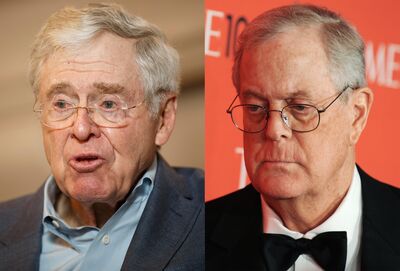
Recently it was rumored that Koch Industries would provide $500 million to Meredith Corporation in a pursuit to take over TIME Magazine. The Meredith Corporation is a media conglomerate that owns various magazines (Shape Magazine, Better Home and Gardens, and even Fit Pregnancy). The Meredith Corporation also owns 17 T.V. stations as well. It has been rumored that Meredith Corporation secured $600 million from a private equity subsidiary of Koch Industries. My guess would be this would originate from the folks at the Koch Equity Development division. According to an article from Chris Leonard the Koch Equity Development group "reports directly to Charles and other senior executives and which operates like a high level think tank, evaluating potential deals, sometimes on a 10 to 15 year horizon".
Historical investments of Koch Equity Development can be seen here. Koch according to a Wall Street Journal article is also in the business of financing small leverage buyouts. Koch even divides out what types of deals they will perform. The company divides acquisitions into four categories. The first is a tuck-in acquisition which allows Koch to purchase a company that will complement an existing Koch company product/platform. The next type of acquisition is the new platform acquisition which targets companies with EBITDA (earnings before income taxes, depreciation, and amortization) of $250 million. Next would be a partnered acquisition where Koch provides equity with other partners (up to a 50% ownership with joint control). The last type of acquisition that Koch will provide is structured investments. In this type of acquisition Koch will will invest $100 million for a minority position (Koch did this with American Greetings back in 2013). American Greetings is the second largest greeting card company in the United States (Hallmark is number one). The company wanted to transition from a publicly traded company to a privately traded company. The deal was funded from contributions of stock from the Weiss family (owners of American Greetings Stock), cash from $240 million of non-voting preferred stock from Koch AG Investment LLC (subsidiary of Koch) along with $600 million of debt financing.
Of course the media has had outcries for Koch Industries from Vanity Fair, the LA Times, The New York Times, and The Nation. What people worry about is that Koch Industries will turn Time Magazine into vehicle for "the Koch brothers" to share their vision of limited government and free markets. People forget that Koch Industries back in 2013 made a run for the Chicago Tribune but then lost interest. What is interesting is that Charles and David Koch appeared in the Time 100 multiple years (2011, 2014, 2015). Vanity Fair points out when Time had a gala David Koch would be dancing and having a good time (the gala was filled with mostly people of different political viewpoints).
Personally I don't believe Koch Industries will take an active role in TIME magazine. To me the $500 million of financing is Koch lending Meredith monies to purchase Time magazine but Koch most likely wouldn't want to get involved with the day to day management. Also given too that Koch has no experience in this area I view the deal has a way to provide financing for a deal while earning a rate of return for Koch.
Subscribe to:
Posts (Atom)


