Showing posts with label charles koch. Show all posts

Sunday, March 17, 2019

Koch Industries CFO Steve Feilmeier Startup Grind Local Wichita

Steve Feilmeier

Recently Koch Industries CFO Steve Feilmeier sat down with Startup Grind Wichita on February 20, 2019. Chase Koch (son of Charles Koch did a similar sit down back in November 2018 which can be seen here and I blogged about here. Koch Industries is making an effort to get executives of the company out in the public discussing what Koch Industries actually does and what they stand for. These days Koch Industries has grown to a company with $130 billion in revenue and roughly 140,000 employees.

Steve currently is the executive vice president and chief financial officer of Koch Industries. He started with the company back in 1997 as a controller for the Koch Chemical Group and then had various roles in controller operations, tax, treasury, cash management, mergers and acquisitions. In the interview Steve said he had 15 different jobs before he became CFO of Koch Industries. Actually Steve wasn't originally groomed to be the CFO of Koch Industries. Koch Industries had identified someone to become CFO and then after 3 months on the job that individual left the company (it was pointed out that Koch was painfully aware Steve wasn't ready for the job). Steve says one of the most unpleasant days of his life was when Dave Robertson and Charles Koch sat down with him to give him feedback about what he needed to work on. Having these different roles within Koch must have given Steve a really good idea of how the company runs internally. Usually if companies are grooming someone to an executive role they have that individual work in different areas to get exposed to understand how different departments function. Steve points out that Charles Koch has been his biggest mentor over the years. At Koch Industries Steve points out that is it okay to say you don't know the answer a question but jokes if Charles Koch asks you then you better have an answer within a couple of hours or the next day.

Steve discussed the inter workings of Koch Industries in terms of how they perform deal making, the culture of the company, and what it was like working with Charles Koch. In terms of deal making Koch treats a $500,000 deal just like a $5 million or a $50 million deal. When performing an investment the most important thing is the quality of the idea, if the idea is actually solving a problem in society. Also when doing a deal with an entrepreneur Koch likes to see if the company will do the right thing (having integrity), if the entrepreneur is are realistic about projections and are honest saying "hey this project actually may cost 2 or 3 times what I project, but I have a backup plan for that", an entrepreneur that is also willing to not take a paycheck for a couple of years and give up their social life in the process. The entrepreneur also has to have a real business plan and it can't be all in their head. The plan has to have real numbers and make logical sense to solving a problem. Also it is pointed out that when Koch creates profit it consuming less resources. Steve discussed how Koch was going to invest $600 million in a project for Georgia Pacific to use technology to improve the quality of the toilet paper (Quilted Northern) while also consuming less resources. The project is suppose to reduce pulp by 20% (which reduces the number of trees cut down), reduce water consumption by 20% (making toilet paper consumes an extraordinary amount of water), and reduce natural gas by 20% (this is used to dry the toilet paper), while expecting to increase the cash flow of Koch Industries by $100 million per year (which would say the project pays for itself in roughly 6 years or has a 17% return on investment).

When actually performing a deal Koch Industries tries to target a 12-15% return on projects that Koch invests in depending on the risk. Back in 2004 or 2005 Koch embarked on a $40 billion investment plan and then came back in 2011 or 2012 and evaluated the progress report of the return on the projects that they invested in. Koch reviewed 13-14 major projects and when they were reviewing the analysis of the overall return of the projects showed a healthy 14% return but Charles Koch with his engineering training called this type of analysis nonsense. Charles pointed out that the average of all the projects were 14% but when you looked at each project (incremental analysis) that comment was not correct. One project may earn a negative return, 0%, 5%, and then some projects may earn an extraordinary return that increases the weighted average of all the projects to a 14% return. After this presentation Koch changed the way they analyzed projects. When Koch evaluates projects the company looks at all the ways it can go wrong and what are the contingencies if it does go wrong. Steve points out that when Charles is evaluating a deal he has doesn't get emotional, is not strategic, and only looks at the numbers to see if it makes sense. Companies sometimes purchase things to be "strategic" and then later have to take a large write down because of a bad deal. What is also interesting is how Koch isn't run with Charles Koch making all the decisions and everyone just executing his plans. Steve remarks that in 23 years being CFO for Koch Industries he has never been told what to do, however he will let management know what is it doing to get ideas and feedback and if he needs "course correction". These days Charles doesn't have to approve everything on the strategies or acquisitions. Charles in a 2015 interview admitted that he used to get involved in every detail in a deal but these days since Koch is so large it is impossible for him to do that.

On April 30, 2004 at 5 P.M. ET Koch purchased Invista for $4.2 billion in cash. Koch purchased Invista for 6 times (12 month trailing EBIDTA) which is not a bad deal. Invista is a textile company that was in charge of making things like carpet, flooring, nylon, fabric that is used to make pillows, mattress tops, bed comforters and many other products that are used in everyday life. Well Charles Koch was thinking after Koch acquired Invista the company would instantly adopt the same market based management philosophy that Koch Industries used. The issue was Invista was pulled out of a large company (DuPont) that had a different culture than Koch. It took Koch 10 years to unravel this and fix all the issues they had. Today, Invista is one of Koch's most profitable companies. Charles reminds CFO Steve Feilmeier that project deserves an F grade on that acquisition.  In 2017, Koch sold Lyrca (a product sold by Invista) to a Chinese company for $2 billion.

Overall, in the long run Koch Industries has done quite well on their investments. Steve mentions that the company has earned a 13-14% return which has led the company to double in size roughly every 5-6 years. The company has reinvested 90% of the earnings back into the company for the past 55 years which has lead to tremendous growth. The company has in the past 6-7 years spent $17 billion on technology capabilities for the company. Part of these monies were spent on Infor which was presented at a forum for the company. Koch was spending $500 million a year on their HR human capital function. Currently, Koch doesn't have know exactly how many employees it has worldwide and has to rely on multiple records and systems to keep track of everyone. Koch purchased Infor which has software that can be stored in a cloud and integrate all the data into one system. Also another positive is that the software constantly updates itself so upgrades aren't required (Koch was generally performing updates every 3-5 years). With the new technology Koch expects to reduce their costs by 20%-40%. Koch also hopes it will reduce the time it takes to hire employees and also help their internal recruiting. Also they hope this technology will improve downtime at plants and refineries that Koch owns as well.

As Steve points out when Charles inherited the company there was $12 million of equity on the balance sheet which has grown by 7500 times since then. This would say that Koch Industries is worth $90 billion and since Charles Koch is a 42% owner of the business his net worth would be $38 billion which is quite different than the figures that Forbes, Bloomberg, and other sources are reporting. However, even as Charles has accumulated massive amounts of wealth Charles is always worried about the business all going away tomorrow. The constant fear or worrying is throughout Koch Industries. Koch executive vice president Jim Hannan has commented that you have to avoid feeling complacent and having the self satisfaction and have to worry about competitors coming in "and then just get dragged down from behind and get our throats slit".

Overall, I thought the CFO Steve Feilmeier handled himself well in the interview, was quite knowledgeable, and also could be personable too. These days Koch has a deep bench of executives that could step in if something were to happen to anyone which is always a good thing. Feilmeier is only 57 years old so he probably still has another decade or so in that role. He mentioned in his role these days he and Charles both mentor other employees and pass on what they have learned over the years. Hopefully in time the results will be passed on to other employees and will allow Koch Industries to grow even more.

Sunday, July 29, 2018

Koch Industries (Case Study): Dividend Growth Rate, Profit Margins, and Reinvesting 90% of Earnings

Image result for koch industries building wichita kansas

Koch Industries has seen tremendous growth in the last 50 years. This has been primarily due to the vision of Charles Koch to continuously improve and grow the company. There is no question that Charles Koch has one if not the best of track records in terms of the rate of long term growth rates of any corporation.

The main reason for this astounding growth rate is the company reinvests 90% of their earnings back into the company (no major publicly traded company would ever consider doing this). Publicly traded companies have to deal with managing investor expectations and like to see smooth increases in earnings and steady increases in dividends. As Charles Koch mentions in this interview with Peter Robinson that Koch Industries had "a small number of shareholders so we can reinvest 90% of our profits in the business so that gave us us the capital to continue to do what we do and still pay out enough so our stockholders had all the money they needed". Koch has also diversified into other businesses over the years. In the 1970's Koch purchased Chrysler Dealerships for $195 million and then by 1982 had sold back 480 properties. In 1989 Koch entered the nitrogen fertilizer business. By 1995 the company created a venture capital fund that invested $150 million into start up companies. More than a decade later Koch would purchase Georgia Pacific This SEC file page and this Wichita Eagle from 1994 (page 24) offer insights into the rapid growth of Koch Industries and the rate of which they were involve in acquisitions. Even the chemical technology group of Koch Industries that David Koch ran saw massive growth. During his 48 year tenure David expanded his division and his division alone purchased 50 businesses (about 1 business on average every year).

One merger that really grew Koch Industries was acquiring Georgia Pacific. Georgia Pacific back in 2004 only had a profit margin of 3%. In my Georgia Pacific case study post I noted that Georgia Pacific is roughly worth $30 billion. Georgia Pacific also consisted of a large portion of the revenue generated by Koch Industries. The history of Koch Industries would also support low profit margins. Charles Koch mentions in this interview that when he took over Koch Engineering the subsidiary had only $2 million in revenue and was pretty close to break even. After Charles took over within a few years sales had doubled and also had a good return. In 1981, according to the Koch vs. Koch case Koch Industries had a roughly $15.7 billion in sales and had earnings of $273 million which would say that profit margin was only under 2% (which is quite low). In 1982 Koch Industries had revenues of close to $17 billion and earned $309 million which would be a profit margin of a little under 2%. The only problem with a low profit margin is if you invest in enough bad capital projects you would risk the safety of the company.

Koch Industries has an unusual policy of reinvesting 90% of their earnings back into the company. In this 2013 Fortune article it is mentioned that Koch Industries spends roughly $100 million per year just on research.When corporations have earnings they either can reinvest by growing and expanding the company or pay out the earnings as a form of a dividend. According to this Koch brochure from 2003 to 2014 Koch Industries invested $65 billion into mergers and acquisitions. If $65 billion represents 90% of the earnings it would say that Koch during this time period earned roughly $72 billion. Now this would say that the company earned on average $6 billion per year. I would highly emphasis on average given Koch is known for continually to grow earnings. The issue with reinvesting 90% of the earnings back into the company is that not all projects will work out. Usually in corporations capital spending is reviewed by a team of individuals and then has to be approved by management before the money can be allocated and spent (the more money that is spent the higher level of approval the project has to receive). There are assumptions made regarding the return on capital the project will produce. Often times companies may have hundreds of projects but only have so much capital so they have to be selective about which projects get funded. Companies will rank the project by the return on capital invested.  By reinvesting 90% of the earnings it would be hard to justify that all projects are worthwhile. However, the history has shown that Koch has invested in projects that have done quite well.

The extreme growth in Koch Industries has led to an amazing increase in the amount of dividends for Koch Industries shareholders. According to Sons Wichita in 1967 (when Fred Koch passed away) the company only paid out $300,000 in dividends (would be roughly $2 million in current dollars). By 1978 the dividend payouts were $3.7 million and by 1980 grew to $17.5 million and then to $28 million in the early 1980's. Not only was the Koch family doing well from the dividends but other Koch shareholders were also doing well too. J Howard Marshall in the mid 1990's with his 15% interest was earning between $7-8 million in just dividends from 1994-1995. Again as the growth of Koch Industries exploded so did the dividends. In 2015 Preston Marshall testified that his mother Elaine Marshall earned roughly $120 million in dividends per year. She currently owns roughly 15% of Koch Industries stock (Charles and David each own 42% each). This would say based on ownership (assuming all this income from Elaine Marshall was from Koch Industries) that Charles and David Koch would each earn roughly $336 million just in dividends each year from Koch Industries. In total the dividend payout for all of Koch Industries would be roughly $792 million. Doing an analysis from after Fred Koch passed away in 1967 would say that the increase in dividends on average has been 18% per year! This rate seems accurate as in Good Profit the description shows that Charles Koch grew the company from a $27 million company in 1967 to a $110 billion company by 2015 would say the growth rate of the company was on average roughly 19%/year which is similar to the growth rate of dividends.

Koch in the past decade or so has entered into other industries that may provide some increase to the historically low profit margins. The most notable recently is Koch has been lending businesses money. In 2013, Koch invested $240 million into American Greetings (a greeting card company) and obtained preferred stock. Preferred stock is more like a bond in terms of an investment. A company like Koch would lend another company money and then get a fixed return (similar to a bond).When Koch made their investment the company was roughly worth 65% less than it was worth in 1998. At the time CFO Steve Feilmeier said the greeting card business "its revenues are flat to slightly growing" and made the comment of trying to send a text to your spouse on their birthday and see how it works out. In late 2017 Koch invested $650 million in Meredith Corp (Meredith was bidding for Time Inc) and a result secured preferred shares that pay a 8.5% dividend (no voting rights though). Koch also received warrants and options that allow them to convert the warrants and options into common shares.

In 2013 Koch purchased Molex Industries for $7.3 billion.  Molex manufactures connectors, wires, cables, and connectors.  From the 2013 Molex annual report the company had a net income of $243 million on roughly $3.6 billion of revenue which would mean the profit margin would be ~7% which appears to be higher than historical profit margins the company has had. $7.3 billion is actually a large price to pay for a company that generated $243 million of net income. If you divide the purchase price by the net income it would say it would take roughly 30 years to justify the value of the deal. This SEC fact sheet for Koch Industries shows the company has an average holding period of 20 years for investments.

Koch in 2017 invested more than $2.5 billion for a large stake of Infor and acquired common and preferred shares of stock. In this video, Koch CFO Steve Feilmeier explains why Koch invested in Infor.  Infor uses software to help companies mange their inventory, accounting processes, logistics, and human resource functions. Georgia Pacific was a customer of Infor which is how the discussions for the investment started. Koch Industries used the investment bank Rothschild for the deal. Koch has part of the deal received preferred stock and common stock in the company. Infor financial statements can be found here (the company is highly profitable).

It appears that in the past Koch Industries had low profit margins given their primary business was crude oil gathering and refinery business. Over time though Koch would diversify their business holdings and tried to invest in industries that would diversify Koch Industries and have a higher profit margin. Charles Koch in this interview when asked what his father Fred Koch would think of the company now given the company has expanded into so many different areas Charles said his father would say "Holy mackerel".

Koch through diversifying over time has decreased the overall business risk (since they don't have all their companies in oil/gas). The Koch Industries today is a conglomerate more similar to Proctor and Gamble or Berkshire Hathaway. By taking the average earnings of the company every year $6 billion and dividing that by the revenue $115 billion would say that Koch Industries has a profit margin of roughly 4-5% which is more than double the profit margin the company had in the 1980s. There is no doubt that Charles Koch and his vision have made Koch Industries wildly successful over many decades. The reinvestment of dividends has grown the revenues, net worth, and dividends of the company.

Sunday, June 17, 2018

David Koch Retiring and The Future of Koch Industries Estate Planning


So with David Koch recently retiring (his official retirement date is July 1, 2018), and I mentioned in my last post that Preston Marshall was accused of spousal abuse and this may affect his ability to own Koch Industries stock. Clearly, the chairman and CEO Charles Koch is dealing with plenty of issues right now. Honestly Charles hasn't had to deal with anything like this since the Koch vs. Koch trial back in the late 1990's. 

The Preston Marshall issue should be interesting. It is mentioned that Preston Marshall owns the most amount of shares outside Charles and David Koch. Earlier in 2018 Preston was accused of spousal abuse. It is said that his wife is in the process of divorce proceedings with him. Of course I am sure he was smart and had a prenuptial agreement for this situation to block her access from his wealth.

The Koch Family has a family office called 1888 Management LLC. Family offices typically handle the investment strategy, the philanthropy strategy, and manage the assets and the entities for one family and facilitate communication between the older generation and younger generation to ensure that there is family harmony when assets are passed down to future generations. In addition to this, a family office can handle things like paying bills for the family, coordinating travel plans, ensuring the security detail, among other tasks. The board of managers for 1888 Management LLC are Steven Feilmeier who is currently the CFO of Koch Industries, Elizabeth B. Koch (wife of Charles Koch), David Koch, Anna B Koch (wife of Chase Koch), Jason Kakoyiannis (who is married to Elizabeth Koch-daughter of Charles and Liz Koch). It should be

It appears David Koch is in bad shape health wise and may not have long to live (personally I wish David Koch had written an autobiography at some point-he has had a very interesting life for sure).  I covered his lifestyle in depth in this post. As someone who worked at Koch Industries his whole career he must not be happy not being able to go to board meetings and make decisions at Koch Industries. The question is what will happen to his ownership of Koch Industries stock?

Most likely his shares would go to his wife Julia. His shares can pass to Julia without having any estate tax consequences (this is known as the martial deduction). Even Charles Koch doesn't have a few billion dollars laying around since nearly all his net worth tied up in Koch Industries stock. David Koch has said in this article regarding the shares of Koch Industries "once we pass on, our children will acquire the stock, and I want to see Koch Industries continue to grow". His shares probably would go first to Julia Koch and then to the children of David and Julia Koch. If Julia Koch is in her mid 50's she would have many decades and possibly see if her children would get involved in Koch Industries.

There are some strategies that Koch Industries could use for the estate planning. The first option would be to go public in order to access capital. However, Charles Koch has said many times that Koch Industries will go public literally over his dead body. Charles Koch in this Forbes article did mention that the family has been performing estate planning for "many years". With this comment and given my last post on the Marshall family. Charles and David Koch have most likely engaged in setting up trusts and trying to get Koch Industries out of their estates and passing it on to future generations. By using grantor retained annuity trusts (like J Howard Marshall III and the Marshall family) and family limited partnerships (FLPs) Koch can pass shares to their children. The only issue is that the family is to pass $22.4 million for a couple without hitting estate taxes. There is not only estate taxes but also generation skipping tax (GST) which are in addition to estate taxes. This is to prevent generations from continuing to pass down wealth. At some point a future generation will have to pay generational skipping tax (of course unless they set up a dynasty trust).The Koch family has personal experience with estate taxes. Fred Koch was concerned about making sure Koch Industries kept liquidity before he passed. During the 1960's the estate tax rate was 77% for anything over $60,000.  In 1962 Charles and Sterling Varner (who had worked at Koch Industries since 1946) wanted to purchase two trucking companies to further expand the crude oil gathering business for Koch Industries. However, Charles from his father was only given approval to purchase one company. Fred Koch went on a trip to Africa and when Charles picked his father up from the airport Charles told his father he ended up purchasing both companies. Fred Koch was furious as he was trying to save cash to pay estate taxes. Charles Koch couldn't pass up an opportunity for growth even if it pissed off his own father. A similar situation occurred in 1967  when Charles Koch wanted to start construction on a new manufacturing facility for Koch Engineering. Charles explained to his father that there was farmland that Koch owned and Charles suggested it be used to build a bigger and better facility to handle the growth of the company. The cost of the facility would be $1.5 million (which would be about $11 million today and Fred Koch replied "A million and a half" We can't afford that".  The deal would lead to the home of Koch-Glitsch which would represent the company to expand their product offerings. Fred Koch would pass away later that year on November 11, 1967.

Another strategy that is sometimes used for high net worth individuals is to purchase life insurance to cover estate taxes. Charles and David Koch were planning to have a meeting with an insurance agent to discuss this however the agent (Michael D. Brown) was unable to make the meeting and lost a $8 million commission as a result. The IRS would comment that this technique would not be advisable. However, if individuals purchase life insurance three years before they pass they can get that out of their estate. This strategy is known as setting up an irrevocable life insurance trust (ILIT). An insurance policy is purchased and placed in a trust. As long as the individual lives more than 3 years the life insurance policy will not be included in their estate. The only issue with this as you age the cost of the insurance premiums increase and it may be uneconomical to do. For executives or important individuals at a company often companies will purchase key person insurance. The purpose is to recognize individuals that have an important role with the company and the insurance pays out of that key individual passes to help the business continue on.

The company could use cash flow from the business to cover the estate taxes. It is estimated that Koch Industries in 2012 earned $8 billion before income taxes and depreciation. Koch on average tries to double every 6 years which would say that the company in 2018 earns closer to $16 billion before income taxes and depreciation. If we assume Charles and David Koch are each worth $51 billion then their total net worth is $102 billion. With an estate tax rate of 40% this would say that roughly a little over $40 billion would be needed to pay the estate tax (this of course assumes no estate planning had been done already). Also for David Koch since he lives in New York he will owe New York estate taxes as well. New York estate tax rates are 16% (this would add another $6 billion of taxes roughly). You are able to deduct the state taxes you pay on your federal estate tax return though. On the positive side Koch Industries could pay this out over a number of years. Using Section 6166 the Koch family could have up to 14 years to pay the estate tax. Although they would have to pay interest (however you would have to compare the rate Koch Industries was going versus this). There is no question over this amount of time Koch Industries could pay off the estate taxes owed by using the cash flow from the ongoing business.

There is no doubt that the next few years for Koch Industries will be interesting and be critical for the future as you have a major shareholder retiring. The Koch family most likely has done extensive estate planning to relieve the possible burden of estate taxes. Property records for example show David Koch has set up his homes into different trusts. Charles Koch also has his homes in trusts as well too.  The objective here is by having a home in trust it avoids going through the probate process-which is public.  I would imagine they have set up trusts, done complicated estate planning, purchased life insurance, and have some cash set aside to cover the estate taxes. There is a good chance that the IRS will contest the estate value of Koch Industries stock as it is a closely held business (this could end up lasting years) and there isn't much of a market for the stock. My prediction would be shares will ultimately end up in the hands of Chase Koch (it should be pointed out that he has children of his own), Elizabeth Koch, John Mark Koch, David Koch Jr, Mary Julia Koch, and the children of Preston Marshall and E. Pierce Marshall Jr. With this number of shareholders there could be no doubts fights and feuds over ownership of the company which could lead to buyouts of certain shareholders down the road. Koch Industries has done very well over a long period of time.  In my last post it was reported that Elaine Marshall who is a shareholder of Koch Industries earned $120 million in 2015 (she has roughly a 15% ownership of Koch Industries stock). This would say that even a 1% interest in Koch Industries stock would yield about $8 million of a dividend (this would say Koch pays out roughly $800 million in total of dividends). Charles and David Koch has grown the company dramatically which has increased not only the earnings but also the dividends. There is no doubt that the future for Koch Industries will be interesting and perhaps even more interesting than the past. As the modern philosopher Sean "Puff Daddy" Combs says "it's like the more money we come across the more problems we see".

Saturday, April 28, 2018

Billionaire Charles Koch: Building and Running an Empire


This hour long interview with Charles Koch (interviewed by Peter Robinson) shares how Charles Koch grew Koch Industries over many decades.

Saturday, March 24, 2018

Charles and David Koch Historical Net Worth from 1984-2018 (Koch Outperformed S&P 500)


Most recently I blogged about David Koch and his billionaire homes and lifestyle. For a number of years I have updated this analysis to show the net worth for Charles and David Koch (beginning back in 1984). The data came from historical articles (Newsbank database), AP, USA Today, and most recently Forbes magazine. 

Forbes ranked Charles and David Koch as each being worth $60 billion. What you can see is a staggering increase in net worth over time. The major source of the growth was after the acquisition of Georgia Pacific (my analysis of that deal here). What you do notice though is although the net worth has increased substantially there is quite some volatility in terms of the the net worth. One way to measure this is standard deviation. The standard deviation from 1984-2018 is roughly 41% for the Koch net worth. To put this in perspective the standard deviation of the Standard & Poor's 500 index is close to 11% (from 1984-2017). This would say that the Koch net worth has been twice as volatile as the stock market. When looking at the return side though the annual compound growth of the Koch net worth is 18%/year while the S&P 500 index (for the same period) was 11%. If you were to compare this on a risk to reward basis (compare the return to the standard deviation) it would say the S&P 500 is a better bet, however the annual difference in the compound growth has made a large difference over time.

If Charles and David Koch said back in 1984 "let's retire and just invest our money in the stock market) they would have invested roughly $375 million each (net worth at the time). Charles in 1984 would have only been 49 years old and David would have been 44 years old. Had those monies been invested in the stock market Charles and David Koch each would have been worth $37 billion each (currently as I write this they are worth $60 billion according to Forbes). This 62% increase represents the reward for the volatility (standard deviation). Also if the Koch brothers had invested those monies in the stock market their dividends would be $680 million (assuming a current 1.86% dividend yield). I estimated that Charles and David Koch each pull in roughly $200 million of dividends per year. Koch Industries has a policy of reinvesting 90% of the earnings back into the company (for capital expenditures, acquisitions, making improvements). According to this article back in 2012 Dave Robertson (President and CEO of Koch Industries) said that Charles Koch "is really focused on the present value of future cash flows, thinking long term". The benefit is the company reinvesting nearly all of the earnings is that the company will continue to grow. The downside is that the cost of growth is not being able to pay out as large of a dividend. Most Fortune 500 companies steadily increase their quarterly dividends to appease shareholders and analysts. However, since Koch Industries is a private company they don't have to disclose their financials. Charles Koch back in this 2006 interview felt "the short term infatuation with quarterly earnings on Wall-Street restricts the earnings potential of Fortune 500 publicly traded companies". Also Koch Industries is much more diversified now than they probably ever been before in their history. Dale Robertson made the comment back in 2012 the company was more diversified at that point than back in 2000 and that a smaller percentage of revenue comes from energy related things (however it is still a significant part of their revenue).

Charles and David Koch has obviously grown Koch Industries to a level they probably never even thought possible. In this 2015 interview Charles Koch said when he first joined Koch Industries he tried to plot out his future success. Koch estimated the growth of Koch Industries out to his retirement and then looking back at his analysis said that in 2013 he exceed his lifetime goal by a 70 fold increase. David Koch in this MSNBC interview said that when he joined the company the revenues were $6 million revenue (when he joined as a salesman in 1970)  and recently the revenues were $2 billion (in 2015) which would be near a 14% annual growth rate. It is quite interesting in terms of the growth story that Koch Industries has had. The question is will it continue after Charles and David Koch are no longer at Koch Industries. 

Saturday, February 17, 2018

Case Study: Koch Industries ABKO Deal with Chrysler


Image result for koch industries 1980's

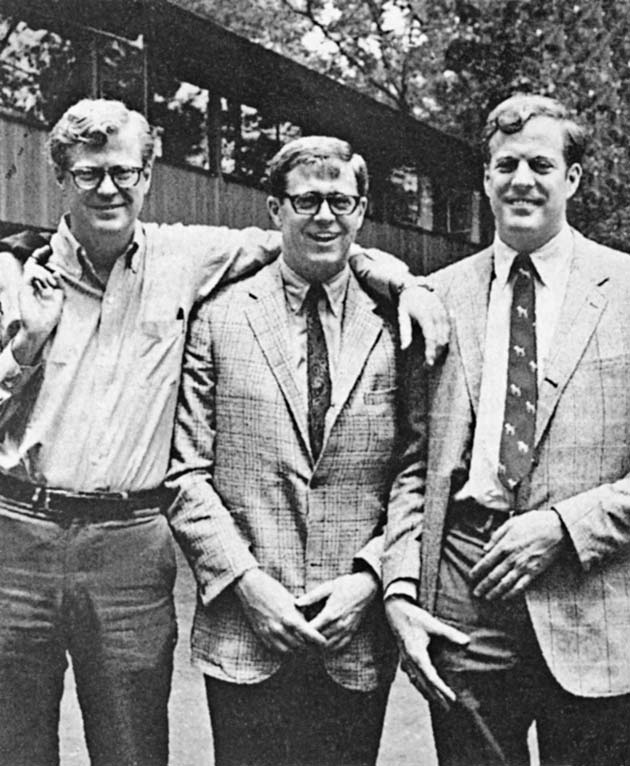
Koch Industries today is a diversified company that is involved in oil/gas refining, paper products, technology, even has their own private investment group to evaluate providing capital to companies. Many people may not know but Koch Industries was actually in the car dealership business back in the 1970's. Chrysler back in the late 1970's decided that it wanted to sell Chrysler Realty Corporation. As part of the Koch vs. Koch lawsuit the Chrysler deal is mentioned in the testimony and the summary can be found here. (The photo above is Bill Koch, Charles Koch, and David Koch).

In September 1979 Koch Industries and George Ablah a land developer from Wichita, Kansas formed a partnership called ABKO. George Ablah who was known as a real estate magnate in the Wichita area and known for constructing shopping malls and developing commercial real estate. George knew Charles Koch (who at that time was only 43 years old) and  ABKO Realty was structured to be 50% /50% deal between Ablah and Koch Industries. The name came from from the first two letters of Ablah and well the KO came from a well known oil and company. Charles Koch is known to be a good negotiator and it was even commented that he will negotiate the hyphen in a 50-50 deal. One of the reasons for using the name was a named that could be used in all 50 states. According to Ablah the purpose of the deal was "an opportunity in our eyes to accumulate a lot of real estate in one purchase, and use it as a base to grow". The concept of ABKO was to sell the dealerships that they purchased from Chrysler realty, reduce the overall debt, and then attempt to diversify out of the real estate holdings. ABKO would establish a grade for each property purchased and rate the properties between a grade of A-D to decide which properties to sell and which properties to keep.Actually George was able to start his real estate career when he used the name of Fred Koch of a reference on a bank loan. Charles Koch would refer to Ablah as the second best business partner he ever had (the first was his wife).

The ABKO partnership would allow Koch Industries and George Ablah to purchase Chrysler Realty stock for a cash price of $70 million (after credits) in September 1979. In the late 1970's Chrysler owned 4,730 dealerships throughout the United States and by Chrysler Realty in 1978 earned about $13 million. However by 1979 the Chrysler was in financial trouble and on the verge of bankruptcy needed a $1 billion from the U.S. federal government. What Koch purchased was 556 Chrysler dealerships and 245 leased Chrysler dealerships. The $70 million deal was financed mostly with debt as Koch contributed only $7 million and the remainder of the monies were financed either by Koch Industries financing or from money borrowed from The First National Bank of Chicago. George Ablah personally guaranteed $29 million of the loan in the deal. 

ABKO would trade 26 Chrysler dealerships for an office building called "Blue Hill". Blue Hill was an office building in New York that only had a occupancy rate of 19% (typically buildings with an occupancy rate of less than 80% are in trouble). The swap for the Blue Hill office building was roughly $25 million. Blue Hill later  would be sold by George Ablah in June 1985 for $100 million. Ablah took on more debt from First Chicago and Chemical bank to make massive capital improvements into Blue Hill and increased the occupancy level to the highest it had ever been. Selling Blue Hill would give Ablah a net gain of $29 million. Taking on debt would catch up to George though. In 1992 George and his wife would file for bankruptcy after changes in federal and state tax rules in the 1980's and early 1990's.

By year end 1981 ABKO was showing results. The entity was able to sell 250 dealerships and realized an after tax income of $34 million ($28 million was paid out as a dividend) and paid down a large portion of the debt owed. Realizing that the economic situation had improved by 1981 Chrysler was interested in repurchasing some of the dealerships owned by ABKO. In 1982 Chrysler and ABKO negotiated a purchase price of $119 million. By this time there were 521 dealerships remaining and Chrysler would purchase 336 of the remaining dealerships from ABKO and sign a 15 year lease on 110 dealerships. The rental income that was generated from the 110 properties had been $11.5 million . The early 1980's were good to Koch Industries.  Koch Industries in 1981 had roughly $17 billion in revenue and earn $309 million (a 20% increase from the prior year in earnings). In 1982 Koch Industries would have $309 million in net earnings.

However, by April 1982 George Ablah was getting worried about the future of ABKO due to the controversy between Koch Industries and the lawsuit between the Koch brothers. Ablah in a 7 page memo felt it was hard to do any type of future planning for ABKO due to the lawsuit (he even mentioned he believed he didn't believe William Koch and the other dissenter shareholders liked him). It was at this point that a split up between Koch Industries and ABKO would occur

On September 20, 1982 Ablah and Charles Koch met to discuss the liquidation of ABKO. It was believed that the after-tax value of the company would be worth $90 million (remember the purchase was $70 million).  In addition to this, Blue Hill would be worth another $26 million. These of course were preliminary talks and estimates. Charles felt the Ablah should stay until most of the properties had been sold. Also Charles felt it was too early to come to a final agreement since he felt the evaluation of ABKO wasn't complete. By October 1982 (this would be the month Bill Koch and other dissenter shareholders would file a lawsuit) Koch had finalized a proposed transaction and bought out George Ablah's 50% interest in ABKO for $45 million.

The analysis of the possible deal was completed in early October and then proposed at the October 19, 1982 board of meeting.  Koch board of directors meeting included Charles Koch, David Koch, Sterling Varner, and Howard Marshall III.  A 30 page executive report was created that outlined the proposal, the history of ABKO, and other pertinent financial information.   When taking into account the present value of the properties the executive committee report came up with a value between $84-$89 million. The deal would have Koch Industries purchase Ablah's 50% interest in ABKO for roughly $45 million. In last minute revisions of the deal Koch would give Ablah two airplanes (a Lear and Citation jet debt free-however this would reduce the cash he would receive).

The Koch Industries board approved the deal November 6, 1982 (this would be a Saturday-in this Wichita Eagle article it is discussed how Koch Industries executives were expected would work all day Saturday-even into Saturday night). During that Saturday meeting William Koch would testify that the calculations and the outcome of the ABKO deal weren't obvious from the report provided from the 30 page executive report). William would end up retaining evidence of what Koch Industries was doing by keeping files on meeting notes, exploration maps, and files on 37 different subject matters.William asked older brother Charles what the future plans were and Charles responded that there were no final plans and they would probably sell the "bad" properties and keep the good properties for the income stream and continue to evaluate in the future.

Between 1982-1985 with the economy improving Chrysler was also improving and Chrysler was more interested in the remaining dealerships increased. The stock price of Chrysler increased from $11/share in 1982 to $37/share in 1985. Between 1982-1983 Koch would sell 30 more dealership properties for $30 million. For the 1Q 1983 ABKO (which was under Koch Properties) had annualized cash flow of $2 billion. By early 1984 Koch believed that the remaining properties should be sold for an amount equal to what Koch Industries could earn on other investments (Koch believed this was 8%/after taxes/after debt). In October 1985 Chrysler agreed to purchase 56 properties from ABKO for $110 million (Koch believed the properties were worth $98 million (based on report shown to the Koch Industries board of directors) so asked for $135 million). The $110 million was paid to Koch over a 10 year period using a long term note paying 12%.

This case study is a great example of how Koch Industries evaluates their deal making process. Honestly it was shocking to me how much little equity Koch had in the ABKO deal. Koch's capital contributions were only $7 million out a $70 million deal. $63 million of the deal was either financed by Koch Industries or by banks. The deal overall turned out to be good for Koch Industries and George Ablah. Koch purchased Chrysler Realty stock for $70 million in 1979 and then sold properties over time earning $34 million in after-tax profits in 1982, sold properties for $30 million between 1982-1983 and then selling the remainder of the properties for $110 million in 1985. It is hard to know exactly how much money was made on the deal however it is clear that Koch Industries and George Ablah clearly did well on the ABKO deal. 

Sunday, November 26, 2017

Why Koch Industries Will Not Control TIME Magazine


Recently it was rumored that Koch Industries would provide $500 million to Meredith Corporation in a pursuit to take over TIME Magazine. The Meredith Corporation is a media conglomerate that owns various magazines (Shape Magazine, Better Home and Gardens, and even Fit Pregnancy). The Meredith Corporation also owns 17 T.V. stations as well. It has been rumored that Meredith Corporation secured $600 million from a private equity subsidiary of Koch Industries. My guess would be this would originate from the folks at the Koch Equity Development division. According to an article from Chris Leonard the Koch Equity Development group "reports directly to Charles and other senior executives and which operates like a high level think tank, evaluating potential deals, sometimes on a 10 to 15 year horizon".

Historical investments of Koch Equity Development can be seen here. Koch according to a Wall Street Journal article is also in the business of financing small leverage buyouts. Koch even divides out what types of deals they will perform. The company divides acquisitions into four categories. The first is a tuck-in acquisition which allows Koch to purchase a company that will complement an existing Koch company product/platform. The next type of acquisition is the new platform acquisition which targets companies with EBITDA (earnings before income taxes, depreciation, and amortization) of $250 million. Next would be a partnered acquisition where Koch provides equity with other partners (up to a 50% ownership with joint control). The last type of acquisition that Koch will provide is structured investments. In this type of acquisition Koch will will invest $100 million for a minority position (Koch did this with American Greetings back in 2013). American Greetings is the second largest greeting card company in the United States (Hallmark is number one). The company wanted to transition from a publicly traded company to a privately traded company. The deal was funded from contributions of stock from the Weiss family (owners of American Greetings Stock), cash from $240 million of non-voting preferred stock from Koch AG Investment LLC (subsidiary of Koch) along with $600 million of debt financing.

Of course the media has had outcries for Koch Industries from Vanity Fair, the LA Times, The New York Times, and The Nation. What people worry about is that Koch Industries will turn Time Magazine into vehicle for "the Koch brothers" to share their vision of limited government and free markets. People forget that Koch Industries back in 2013 made a run for the Chicago Tribune but then lost interest. What is interesting is that Charles and David Koch appeared in the Time 100 multiple years (2011, 2014, 2015). Vanity Fair points out when Time had a gala David Koch would be dancing and having a good time (the gala was filled with mostly people of different political viewpoints).

Personally I don't believe Koch Industries will take an active role in TIME magazine. To me the $500 million of financing is Koch lending Meredith monies to purchase Time magazine but Koch most likely wouldn't want to get involved with the day to day management. Also given too that Koch has no experience in this area I view the deal has a way to provide financing for a deal while earning a rate of return for Koch.

Friday, July 15, 2016

What Charles Koch Reads on The Toilet?


Johnathon Karl of ABC News who recently did an interview with Charles Koch took this picture of the books that are locate in Charles Koch's bathroom at his Koch Industries office at the headquarters in Wichita, Kansas. I covered the readings from the Koch Industries own publication of Discovery here. I know Charles Koch is big into innovation so why doesn't he have all of those books on an iPad or Kindle!!

Big Money by Ken Vogel
Scaling Up by Verne Harnish
1920 : The Year That Made The Decade Roar by Eric Burns
The Greatest Hoax by James Inhofe
Coolidge, An American Enigma by Robert Sobel
When Markets Collide by Mohamed El-Erian
Game Changer: How You Can Drive Revenue and Profit Growth with Innovation by A.G. Lafley
Tap Dancing to Work Warren Buffett on Practically Everything by Carol Loomis
Knowledge and Decisions by Thomas Sowell
No Apology by Mitt Romney
Inflated by R. Christopher Whalen
Beirut to Jerusalem by Thomas Friedman
Jack: Straight from the Gut by Jack Welch
Scared to Death from BSE to Global Warming why Scares are Costing Us the Earth by Christopher Booker
Cool It: The Skeptical Environment's Guide to Global Warming by Bjorn Lomborg
Moneyball by Michael Lewis
The Quest Energy, Security, and the Remaking of the Modern World by Daniel Yergin
Against The Gods: The Remarkarkable Story of Risk: By Peter Bernstein
The Amateur by Edward Klein
Up From History: The Life of Booker T. Washington
I Am John Galt by Don Luskin 
The Art of What Works: How Success Really Happens by William Duggan
Ayn Rand Box Set by And Rand
Capitalism at Work by Robert Bradley
The Right to Try: How the Federal Government Prevents Americans from Getting Lifesaving Treatments They Need by Darcy Olsen
The Great Deformation by David Stockman


Saturday, October 10, 2015

Charles Koch and "Good Profit" Book Review/Summary


Well October 8, 2015 I looked out on my doorstep and saw a package from Penquin Publishing and was surprised that I received Charles Koch new book "Good Profit". The book had on it uncorrected proof/not for sale on the front cover and the book. Also the copy I received ended up being 250 pages as opposed to the 288 pages for the final version. I have covered Koch Industries for years as I have written about the estate planning/succession planning here and even talked about the daughter (Elizabeth Koch) here. Of course any blog post I have written can be found here. I ordered the book from Amazon back in March 2015 but I guess I got the book earlier then the release date of October 13, 2015.

As soon as I got the book I couldn't put it down. What is nice about the book is that it is written with more of a personal side of Charles Koch and his family. Throughout the book stories, anecdotes, and analogies are used to get across the points Koch tries to make. For instance Koch in his free time likes to read praxeology, golf, work out, and eat heart healthy meals. The book mainly is about how Koch Industries operates and its history (both the good and the bad) is a great look into how Koch Industries truly operates and what Market Based Management (MBM) is truly about which has led Koch Industries to tremendous growth sine 1961. The company in 1961 was valued at $21 million and now in 2015 is valued closer towards $110 million (27 times better than an investment in the S&P 500-assuming dividends were reinvested). The company plans to grow 12% per year for the continual future. During the 2008 recession Koch increased doubled its shareholder equity and increased its workforce by 40%. The book emphasis the five dimensions of MBM which are Vision, Virtue and Talents, Knowledge, Decision Rights, and Incentives.

What I think readers willl find interesting is that Charles Koch didn't begin out as a Libertarian he read the "entire political spectrum from "left" to "right" and everything in between. This means he even read John Maynard Keynes, Karl Marx, and Vladmir Lenin. Two books for Koch that ended up being life changing were Mises Human Action and F.A. Harper's Why Wages Rise.

Charles points out that growing up Frederick Koch (the oldest son) wasn't one for physical labor. Since Fredrick Koch didn't develop a work ethic Fred Koch was harder on Charles Koch making him work at age 6 and made sure work occupied most of his time. Koch writes that even at age 79 he still works 9 hours a day.  His work history started out digging dandelions and then went on to bail hay and milking cows. In high school Charles was working on the ranch fixing fences, digging ditches, shoveling wheat in a grain elevator. Growing up Charles wasn't easy to deal with and attended 8 schools by the time he graduated high school. During his junior year he got thrown out of Culver Military Academy for drinking beer on a train). One summer Koch has so much homework he would wake up in the middle of the night and sight on the shower bench in the communal bathroom to finish it. Charles improved and was accepted into MIT. While at MIT Charles was maintaining a B- average (he was majoring in engineering too/enjoying himself having a social life) when he came home for summer break is dad told Charles that he would only pay for his education if Charles fully applied himself. After this talk Charles improved his grades a full point. After Charles graduated he went to work for Arthur Little were he designed a plant that produced a potent marijuana derivative. It was after father Fred Koch passed away that Charles Koch took the reins at Koch and growing it by leaps and bounds.

The personal side of Charles Koch is somewhat interesting he from an early age was a trouble maker and sometimes got into fights. You can't be an entrepreneur playing follow the leader. Charles once had a heated debate with a girlfriend of David Koch during the 1960's when she was taking views that the government should run people's lives. This girl mentioned that the government should act however the majority wanted. Charles most likely got frustrated and asked her if she was a redhead (knowing David he was probably dating a brunette or blonde) and the majority of the population voted to kill redheads would she be in favor of that. The girl started crying and even cried the next day which Charles still remembers after 50 years when it happened.

When it comes to subsidies Charles Koch is against all forms of corporate subsides. Koch for years has been against ethanol mandates (this actually increases the cost of food for the least advantaged people). Koch dispels the myth that Koch would profit from the Keystone Pipeline. He write that Keystone would increase the cost that Koch pays for crude by $3 per barrel which would lower Koch profits by $260 million per year. However, Koch takes the position that the pipeline in the long run would be better for the economy as a whole even if the company loses money from it.

Charles Koch is open and honest about the successes and failures of Koch Industries. In 1974 Charles Koch and his wife Liz Koch were breaking ground on their first home. During this time Koch Industries had to deal with price controls, the Arab oil crisis worried Charles that Koch Industries would go bankrupt. Charles Koch also discusses the 1996 pipeline leak that killed 2 teenagers Texas. Koch reflects openly and honestly how that incident along with a few others changed the company view about safety. It was after this incident that Koch switched to a 10,000 percent compliance (100% of employees acting in compliance 100% of the time). Koch discusses how the company when it had dramatic growth it had internal fraud issues were employees were setting themselves up as vendors, taking inventory, and receiving kickbacks which Koch quickly shut down.

Overall the book is well written and easy to read and includes a personal side of Charles Koch not seen before-like the 153 death threats he got in 2014. The book discusses how Koch has grown tremendously since the 1960's (Charles didn't simply inherit the company as some might say). The company has grown so much by reinvesting 90% of their earnings back into the company. What is interesting is how Koch Industries despite having 100,000 employees doesn't appear to be bureaucratic and individuals are always asked to challenge and consider continuous improvement which sometimes never occurs at even Fortune 500 companies. Overall the book is a mix of economics, business, behavioral finance, philosophy, and good story telling of business failures. What I enjoyed was Charles Koch is honest about his failures. Koch is apply to apply Market Based Management to every day examples (including the NFL and even how much time he should spend working editing grammar of the book he wrote). The book is really a great book for anyone who wants to try to live there life to their maximum potential.

Saturday, September 26, 2015

Did Charles Koch Really Inherit His Wealth?

Home

One thing that bothers me is when people say that Charles Koch merely just inherited there wealth implying that he did not work for it. However, these same people ignore the facts of reality about how Koch Industries was really a very small company when Charles Koch took over a company that was worth $21 million in 1961 (the company had less than 700 employees) and growing it into a $100 billion company by 2014 (with roughly 100,000 employees). What is interesting to note is that Koch Industries has grown 27 times faster than the S&P 500. Koch essentially doubles every 6 years. Charles mentions this growth rate in the company newsletter Discovery here. This would mean that Koch has a growth rate of roughly 12%/year which is pretty good considering the company has 100,000 employees and over a $100 billion in sales. Koch has grown faster than the S&P 500 too. The long term return from 1926-2014 in the S&P 500 was 10% vs 12% for Koch. This 2% difference doesn't appear to be much but when you compound it over many decades it can make a substantial difference. Part of the reason Koch may have grown faster than the S&P 500 is that the company reinvests 90% of the earnings back into the company. Koch has grown at 12% per year but the Koch net worth has grown at roughly 17% per year as I mentioned in this post (difference may be due to Charles Koch not having all his assets in Koch Industries).

Charles Koch never wanted to be a country club bum as his father Fred Koch use to put it. Growing up Charles Koch and his brothers never received an allowance. Fredrick Koch was actually the oldest out of all the Koch children and when Fred had Fredrick perform chores at one of the family ranches he had a nervous breakdown. After this disappointment Fred was very hard on his second son (Charles) and had him working at age six.  Growing up Charles was somewhat of a trouble maker: he got into fights, stayed out late drinking, and had quite a following of girls according to the book Sons of Wichita. Charles even got kicked out of school for drinking beer. Even brother David Koch admits in this 1986 New York Times article that Charles as a teenager did awful things but ended up being a "bad boy who turned good". Entrepreneurs in their own way are trouble makers because often they are willing to take risks that that few people are willing to take on.

Now most people who inherited a business could have just sat back and waited for their dividend checks to come in but Charles didn't. In fact the evidence shows that 70% of family fortunes are usually spent by the second generation and 90% by the third generation. Charles was never working 40 hour weeks. In this article from Fortune from 1982 Charles was putting in 10 hour days at Koch. This article from CNN money from 1997 shows that he worked around the clock putting in 12 hour days (then after that he would go home and work some more) and expected executives to show up on Saturday mornings. Not only would he put in extra hours after he went home but would work on weekends, and holidays even. Also Charles didn't think twice about calling meetings that ran into Saturday evenings. In August 1968 he called a meeting that began at 4 P.M. Sunday afternoon and it didn't last until midnight. Charles is still working harder than ever these days. In an article from the Wichita Eagle last December his wife Liz said Charles gets up around 6 A.M. gets to work around 7 A.M. and works until 6 P.M. and then in bed by 9 P.M. He plays golf about 2 times per week. In addition to playing golf he has a daily workout routine which consists of a 90 minute work out- 30 minutes of Pilates, 30 minutes of aerobics (usually on a elliptical), and 30 minutes of  weight lifting). According to  his wife Liz he is on a disciplined and strict diet.

Brother David Koch is no slouch either. David told Avenue magazine (Oct 2014 edition) last year that he usually gets to the office around 9 A.M. and leaves by 7 P.M. and 12 hour days are not unusual for him. It is important to note that Fred Koch (father) had his sons working from an early age. Charles was working on the family ranch at age 6 and David remembers spending his summers on the family farm work from 7:30 A.M. and working until 5:30 P.M. For another summer job David was working 10 hours a day 7 days a week doing manual labor jobs in sometimes in 115 degree heat too.

Remember Charles Koch is 79 years old. How many people who are 79 are still working? Charles Koch could have retired many year ago but he didn't. He continues to put in plenty of hours at Koch Industries. He isn't doing it for money (the man still lives in the same house he built in 1975). My guess is that he works for personal fulfillment and trying to make a difference. John D. Rockefeller retired at age 58 (he lived to be 97 years old), Andrew Carnegie was 66 when he first thought about retiring (he ended up living to be 83), and even Bill Gates last day at Microsoft was when he was in his early 50's. Despite these other titans retiring early Charles Koch continues to show up to the office plowing away and trying to grow Koch Industries. Charles claims in this Forbes article that if he got hit by a truck maybe things would run better. 

Sunday, August 9, 2015

Koch 2015 Seminar, Charles Koch Washington Post Interview, and "Climate Change"


So over the past few weeks so there has been some Koch news so I thought I would let people know my take on what is going on (after all I believe my blog has more posts about Koch than any other site on the internet).

The semi-annual seminars have been taking place since 2003. With a meeting from August 1-August 3, 2015 with private donors in Dana Point, California at the St. Regis Monarch Beach resort (as I write this rooms start at $655/night) 450 wealth donors (people who have created tremendous value in society) gathered for the semi-annual "Koch Seminar" which was has the title of "Unleashing Our Free Society". Membership fees are around $100,000 per year. Only 9 organizations were invited to the seminar. The conditions were that the media could not interview donors without there permission and had could only take notes pad and paper (very old-school indeed). Although the list of donors are not known this leaked memo from a previous seminar would give you a pretty idea of who would be at the seminar. In the note that Charles Koch sent out to attendees he also attached this 2014 Wall-Street Journal article about William Gladstone who was the 19th century Prime Minster of Britain. Charles Koch said that this current battle is for "the life or death of this country".

The actual text of the speech that Charles gave donors can be found here from Bloomberg. He says that "our mission, as we say, is to unleash our free society and expand opportunity for everyone". He goes on to talk about a free society being a "society that maximizes peace, civility, and well being for everybody". Charles then goes on to discuss how GDP is a bad measure for the economy. This article from FEE does a good job of explaining why GDP is a bad measure for the economy. Charles then goes on to talk about if we can achieve a 4% growth rate we can take the average American from $42,000 per year to $100,000 (just the magic of compound interest).

One area that I think liberals actually agree with the Koch brothers on is criminal justice reform. Even President Obama mentioned the Koch brothers effort on criminal justice saying "You've got to give them credit. You've got to call it like you see it" as this WSJ article discusses. In a recent interview with the Washington Post to the surprise of some people when talking about crime Koch says "to me, if someone is committing a crime, to deal with it to use minimum force necessary to prevent the crime..there has got to be a way to stop that. I mean, I'd let the guy go. No big deal. He's not really hurting-maybe he's avoiding taxes or something, but to end  up in death is outrageous". Perhaps to Charles Koch Black Lives Matter.

In a rare interview with the Washington Post Koch talked about the 2016 election and his views. People claim that the Koch brothers have so much power. This of course is just nonsense. Has a Koch brother ever forced you to pay taxes, stop at a stop sign, or get a permit? The answer to all these questions is obviously no. However, government can force people into doing all of these things since they are truly the ones with power. When asked about seeing a Republican in the White House Charles Koch replies that he is a "classical liberal". The problem is that Republicans do pretty much the same thing as Democrats once in office. The best quote from Charles in the whole interview is when he says "I think the Democrats are taking us down the road of serfdom at 100 miles an hour, and I think Republicans are taking us at 70 miles an hour". He is a big fan of Calvin Coolidge who would make modern day Republicans look like middle of the road candidates. One item that Charles would eliminate is welfare for both the rich (corporate) and poor. Koch then goes on to discuss in this article how the banks are the biggest proponents of corporate welfare.The banks he says "got massive bailouts,virtually free money from the Fed, and regulations that are crushing the smaller banks, the community banks". The Federal Reserve now decides what banks can do now, what products they can offer, and even can decide when a bank pays out a dividend. Of course the largest banks are major contributors to both political parties.

Koch Industries benefits from the fact that U.S. based companies are not allowed to export natural gas overseas to foreign countries where the price is actually much higher than it is here in the U.S. Something that I didn't know was that Koch Industries uses about 4% of the industrial consumption of natural gas (the division in charge of this is Koch Global Supply and Gas-company information can be found here. Currently, natural gas prices are near all time lows. Anyways, Koch benefits and as other liberal bloggers have reported Koch has received millions in corporate subsidies. However, Koch is still for abolishing all corporate subsidies. To be perfectly honest Koch does roughly $115 billion in revenue (profit as I estimated in this blog post is roughly $6-$10 billion/year). Koch could still be profitable without the subsidies. Charles Koch relies on the principal of treating everyone equal (this is a libertarian concept after all).

When asked about climate change Koch admits "well, I mean I believe it's been warming some". He goes on to say though there could be a measurement problem with how the temperature is measured (on ground vs. in the sky).  What he doesn't agree with is that it will be "catastrophic". According to Koch, "there is no evidence of that. they have these models that show it but the models don't work..to be scientific, it has to be testable and refutable". Let's remember that science is not a democracy. Charles also has a couple of masters degrees in engineering from M.I.T. too. The question is whether you want to reduce economic growth for something that may have a very small chance of happening. Charles Koch even had dinner with Bill Gates in which they discussed climate change (for the record Gates who is a big Democrat pointed out that Koch was a "very nice person". I honestly believe that if there was enough evidence to show that there was a large possibility of "climate change" destroying the earth Koch would shift his opinion on the subject. Brother David Koch has said that global warming is actually a positive since extending the growing seasons in the northern hemisphere which will allow more land will be able to produce food. In a breakfast speech that Bill Koch gave to 600 people at the Palm Beach Chamber of Commerce October 17, 2013 said he isn't a believe in global warming and actually believe we could be lead to a mini-ice age. Bill Koch has some science background since he has a PhD in chemical engineering from M.I.T. saying that people who are calling for carbon dioxide emissions are "on acid". He goes on to say the best way to reduce carbon emissions is to plant trees. Koch says that "to get away from carbon dioxide the human race will have to move to another planet".

It appears that the Kochs are being less secretive as they are now allowing the media to attend their events (although some of them complain about the access as reported here). Let's remember that this is a private party and people can either decide to be there or not. On the other side in this recent WSJ article Koch donors are tired of being demonized. Donors recently wrote a letter to the Dallas Morning News describing what the Koch brothers want.

If I were in charge of the seminar I would videotape and record all the sessions to show the public that these people are really not evil and just want to see more freedom and liberty. Part of the reason I don't think the media continues not to like the Koch brothers is because they still see them as secretive.  I personally don't think even some of the crazy liberals would go after 450 individuals who have different beliefs. If there were only 4 donors I might change my view. Part of the reason why I think Koch has been more open recently is the number of death threats, cyber attacks, and name calling that has been going on for years. This transformation was recently talked about by the New York Times here. If I would were advising the Koch brothers I would tell them to continue to be even more open so people can understand their values, beliefs, in order to not distort them which I would think in the long run lead to fewer death threats, cyber attacks, and just fundamental misunderstanding.

Saturday, March 21, 2015

Koch "Secret" Meeting Summary of the Transcript of June 2014 Meeting

thread_koch-blog427.jpg (427×234)

Well for a while now I have had the Koch transcript from their meeting from June 13, 2014-June 16, 2014 at St. Regis Monarch Bay resort, an agenda of the conference can be found here. It is clear the the people at these meetings are truly dedicated to free markets as the meetings start at 8:45 A.M. and go on until 9 P.M. Some of the meetings included titles like "Saving America: Our Fight to Advance Freedom and Reverse the Country's Decline", and a book discussion with Amity Shales on Calvin Coolidge as the forgotten President, and "Collectivism: Exploring Its Nature and Consequences" by Dr. Victor Davis Hanson. The actual transcript for the meeting fills about 80-90 pages worth of material which is pretty incredible. I have to actually thank Lady Libertine for posting the transcripts on her blog and also providing the audio which can be found here (if you go to the YouTube chanel you can see all of video from the meetings).

Mark Holden Chief Counsel for Koch Industries starts the meeting talking about Democracy Alliance which is the equal on the other political side. Rob McCay heir to Taco Bell fortune, George Soros, Tom Steyer, and Chris Hughes (co-founder of Facebook) are all majors contributors to Democracy Alliance. This is interesting because you generally hear about all the Republican funding even though there is just as much funding on both sides. Mark Holden points out that he will no longer eat at Taco Bell (even though he likes it)  after he learned that McKay was a big supporter of Democracy Alliance. Actually according to Holden, Democrats have 172 groups in the "donor network" which is more than 31 groups within the Republican donor networks. Holden points out if you add in Big Labor (labor unions), Democracy Alliance, PACs, and super PACS, will spend around $2.2 billion (we shall see if this actually happens).

Norman Reimer discusses the criminal justice system and how it is is overly abusive (Charles Koch and Mark Holden wrote this op-ed that was published in Politco discussing the overcriminalization of America). What people on the left forget is that libertarians like Charles and David Koch believe people no matter what race, sex, color, or income should be treated equal in the eyes of the law. Reimer quotes interesting statistics "2.1 million people are in prison..the United States has 5% of the world's population yet 25% of the world's prisons".

Richard Fink who earned a PhD in economics from Rutgers gives a lecture on the current situation of America and how to change this course. Fink starts out by giving some stats on the current debt which currently is $16 trillion however including the present value of the unfunded liabilities is roughly $200 trillion. What Fink stresses is the "middle third" or 30% of voters who don't have any ideological preference. The problem with what "collectivists" do according to Fink is "they take people and tell them that you're a victim and the American dream no longer exists..and if they know anything about psychology and about people who have "victimitis" they are the most depressed, unproductive people. They become depressed, they become addicts, or they become aggressive". He goes on to quote that "90% of alcoholics are not psychologically built. They see their lives as without purpose. Same too with addicts same percentage. 85% of students who attempted suicide said life had [had no] meaning".

Charles Koch is one of the last speakers on the final days. He tries to rally everyone together explaining how the fight for liberty needs more freedom fighters. What many people may not realize is how Charles Koch and his family are at risk (Koch has received hundreds of death threats which he discusses in this article) and David Koch has to have security detail travel seen in this article. Koch Industries according to Charles the company has "10 million malicious hacker attempts on [their] IT systems every month"  What Charles Koch explains that we have two choices for the future of collectivism or freedom. The definition of collectivism to Charles is "based on the belief that people aren't capable of running their own lives, and those in power are capable of running it for them". One great example of this is the war on poverty which since 1954 we have spent $20 trillion. What is even more interesting is that the rate of poverty has virtually been almost unchanged even after spending vast sums of money. Another interesting statistic is that 1 in 3 jobs now require government permission. If you think about it so many professions (doctors, lawyers, accountants, financial planners, dentists, even repair people) have to be certified by some bureaucratic organization saying that they are deemed okay to work with the general public. Also government subsidies like ethanol increase the cost of food about 35% which generally affects the people who generally elect collectivists.

What seems evident is that the presenters at the Koch seminar don't really say anything that is crazy or evil. What is ironic are the people who often say the Koch brothers are evil, want to pollute the planet, and are just old and rich greedy guys are also the same individuals who want to resort to violence which leads to the death threats. Everyone no matter what political side of the spectrum should be treated with respect. Whether or not you agree with them Charles and David Koch are firm believers in individual liberty and trying to get support from individuals to make sure we can continue being free and prosperous. Society can't prosper when you have few producers and everyone else consuming what the producers create. As of January 2015 close to 93 million people were not working. The economically illiterate usually look the unemployment rate. However, the better measure is the labor participation rate which is near the same percentage as it was in the late 1970's (despite the fact that people can now work at home, some employers offer flexible working  hours, and medical care has greatly advanced). What is interesting is that the Koch brothers are attacked for just wanting to get rich and making everyone else poor. However, allowing people to pursue their own interests given their level of capability and talents and allowing them to create value would make everyone better off. By the government requiring permits, certifications, and training (some of which are not needed) makes it financially prohibitive for the people on the lowest rungs of the economic ladder to move up. Not allowing people at the bottom of the economic ladder to improve themselves increases income inequality since they don't have the financial capital, resources, or time to comply with regulation and rules. Charles and David Koch want everyone to succeed which we should find praiseworthy and laudable.